The Adjectives Worksheet for Class 2 That Turns Every Kid into a Word Wizard (Parents Are Shocked by the Results!)
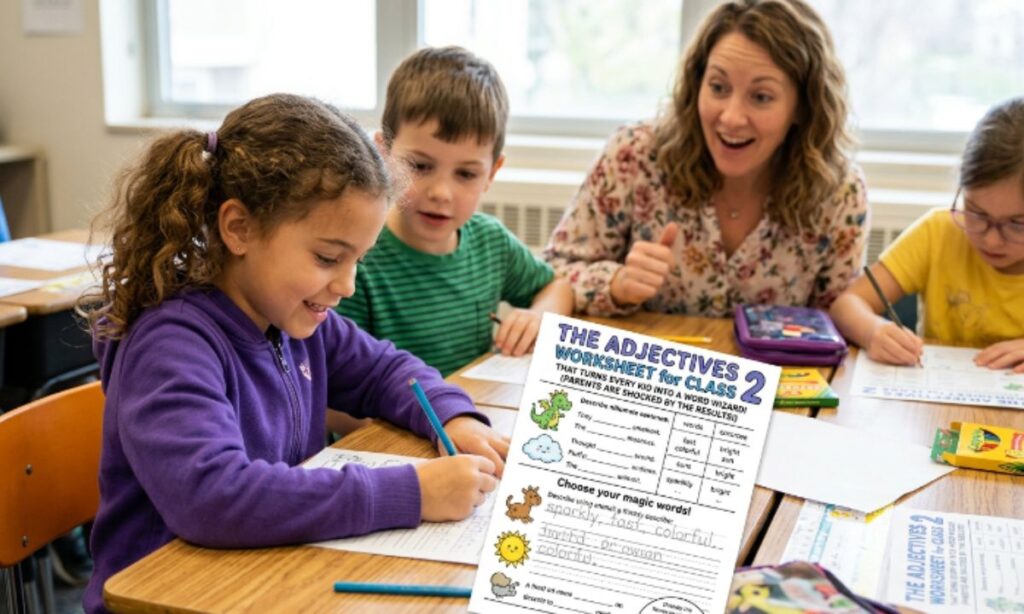
Learning grammar doesn’t have to feel like a chore. If your child is in Class 2 and struggling to understand describing words, a well-designed adjectives worksheet can make all the difference. Teachers across schools are switching to this simple, free resource because it turns a boring grammar topic into a fun word game that kids actually enjoy.
In this article, we’ll break down what adjectives are, explore their different types, and give you a complete adjectives worksheet for Class 2 with answers and pictures — everything your child needs to master this English grammar topic in one sitting.
Teachers Are Going Crazy for This FREE Adjectives Worksheet for Class 2 – See Why It’s Breaking the Internet
Grammar teachers know that kids learn best through repetition, visuals, and hands-on practice. That’s exactly why this worksheet has become so popular in classrooms and homes alike. It combines fill-in-the-blank exercises, picture-matching activities, and simple sentence practice — all designed specifically for 7 to 8-year-olds.
Unlike dense textbook exercises, this worksheet uses everyday words and relatable examples like “big dog,” “red apple,” and “happy child” so young learners can connect grammar rules to things they already know.
What are Adjectives?
An adjective is a word that describes a noun or a pronoun. It gives extra information about a person, place, animal, or thing — telling us how something looks, feels, sounds, or behaves.
For example:
- The tall boy ran fast.
- She has a cute puppy.
- It was a sunny day.
In each sentence above, the bolded word describes the noun that follows it. Adjectives make our sentences more colorful, specific, and interesting to read or hear. Without them, sentences would sound flat and give very little detail.
Simple trick to identify adjectives: Ask “What kind?”, “How many?”, or “Which one?” about a noun. The word that answers this question is usually the adjective.
What are the Different Types of Adjectives?
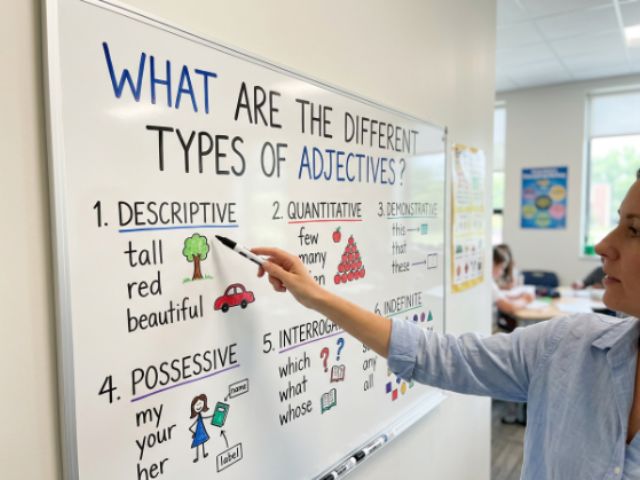
Adjectives come in several categories, each serving a different purpose in a sentence. Teaching Class 2 students these categories early helps them build a stronger grammar foundation for future classes.
| Type of Adjective | What It Describes | Example |
| Adjective of Quality | Kind or characteristic | honest man, beautiful flower |
| Adjective of Quantity | How much | some water, little sugar |
| Adjective of Number | How many | five pencils, ninth row |
| Adjective of Size | Size of the noun | short boy, huge elephant |
| Adjective of Shape | Shape of the noun | round ball, square box |
| Adjective of Color | Color of the noun | red dress, blue sky |
| Adjective of Age | Age of the noun | young girl, old man |
| Demonstrative Adjective | Points out which one | this pen, that car |
| Interrogative Adjective | Asks a question | whose book, which toy |
| Material Adjective | What something is made of | wooden chair, golden ring |
Adjectives of Quality
These answer the question “of what kind?” They describe a noun’s character or condition.
- Example: Rima is a kind girl.
Adjectives of Quantity
These tell us how much of something there is, without giving an exact number.
- Example: He drank some milk.
Adjectives of Number
These tell us exactly how many, or in what order.
- Example: There are seven days in a week.
Demonstrative Adjectives
These point to a specific noun — words like this, that, these, and those.
- Example: This bag is mine.
Once children understand these categories with easy examples, identifying adjectives in a sentence becomes second nature.
Adjectives Worksheet for Class 2
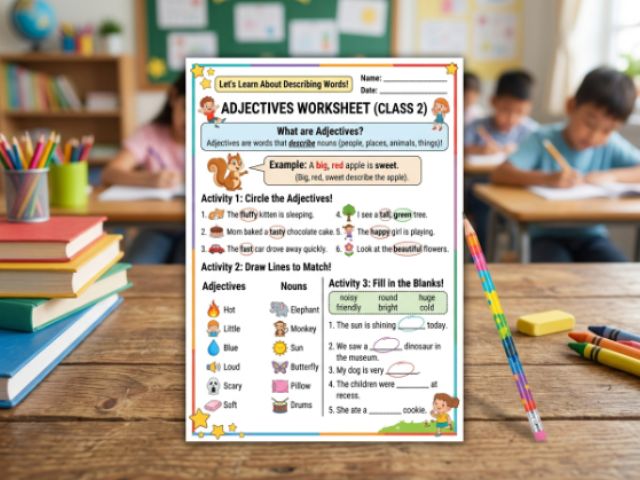
Here’s a simple practice worksheet you can use at home or in class. Read each sentence and try to spot the adjective before checking the answer key below.
Read More: Active and Passive Voice: Worksheet with 100 Examples, Answers, Differences, and Rules Revealed!
Part A: Underline the Adjective
- The elephant is a big animal.
- Priya has a shiny bicycle.
- We saw a tall building near the park.
- My grandmother tells funny stories.
- The ice cream was very cold.
- He wore a red cap to school.
- That was a difficult question.
- The kitten is soft and fluffy.
- There are ten apples in the basket.
- This is a beautiful garden.
Part B: Fill in the Blanks
Choose the correct adjective from the box: sweet, five, round, wooden, happy
- The mango tastes _______.
- I have _______ crayons in my box.
- The ball is _______ in shape.
- We sat on a _______ bench.
- She had a _______ smile on her face.
Part C: Write One Adjective for Each Noun
- Sun – _______
- Ocean – _______
- Tiger – _______
- Flower – _______
- Cake – _______
The Adjectives Worksheet for Class 2 With Answers
Checking answers together helps reinforce learning and builds confidence. Here are the solutions to the exercises above.
Part A Answers:
| Sentence Number | Adjective |
| 1 | big |
| 2 | shiny |
| 3 | tall |
| 4 | funny |
| 5 | cold |
| 6 | red |
| 7 | difficult |
| 8 | soft, fluffy |
| 9 | ten |
| 10 | beautiful |
Part B Answers:
- sweet
- five
- round
- wooden
- happy
Part C Answers (sample):
- Sun – bright
- Ocean – deep
- Tiger – fierce
- Flower – colorful
- Cake – delicious
Note: Answers in Part C may vary since children can choose any suitable descriptive word — this is a great opportunity to encourage creativity rather than one “correct” answer.
Adjectives Worksheets for Grade 2 With Pictures
Picture-based worksheets work especially well for young learners because they connect words to visuals, which improves memory and understanding. Here’s how to create a simple picture worksheet at home:
- Match the picture to the adjective: Show images of a big elephant, a small ant, a round ball, and a red apple. Ask kids to match each picture with the correct describing word.
- Describe the picture: Show a photo of a park, a pet, or a fruit and ask your child to write two or three adjectives describing it.
- Color and label: Give an outline picture of an object (like a house or a tree) and ask kids to color it, then write one adjective describing their finished picture.
These visual activities are especially useful for classroom worksheets, homework assignments, and quick revision before tests, since they keep young learners engaged without feeling like traditional grammar drills.
Why This Worksheet Works So Well
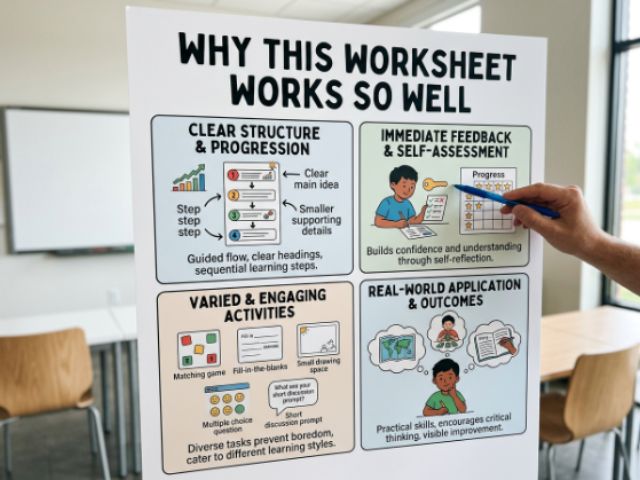
- Age-appropriate vocabulary: Every word and example is chosen to match what a 7-8-year-old already understands.
- Mix of formats: Fill-in-the-blanks, underlining, and picture matching keep the child interested.
- Includes an answer key: Parents don’t need to be grammar experts to check the work.
- Builds a strong foundation: Understanding adjectives early makes future topics like comparative and superlative adjectives much easier.
Frequently Asked Questions
What is an adjective for Class 2 students?
An adjective is a word that describes a noun or pronoun, telling us more about its quality, size, color, shape, or number.
How many types of adjectives are there?
There are mainly eight to ten common types, including quality, quantity, number, size, shape, color, age, and demonstrative adjectives.
What are 5 examples of adjectives for kids?
Five simple examples are big, small, red, happy, and soft.
How can I teach adjectives to a 7-year-old easily?
Use pictures, everyday objects, and simple sentences, and ask “what kind?” or “how many?” to help them spot the describing word.
Where can I get a free adjectives worksheet for Class 2?
Many educational websites offer free downloadable PDF worksheets with fill-in-the-blank exercises, pictures, and answer keys for Class 2 grammar practice.
Are adjectives and adverbs the same?
No, adjectives describe nouns and pronouns, while adverbs describe verbs, adjectives, or other adverbs.
Conclusion
Adjectives may seem like a small grammar topic, but they play a huge role in helping children express themselves clearly and creatively. With the right adjectives worksheet for Class 2 — one that combines simple explanations, varied exercises, and answer keys — young learners can quickly go from confused to confident.
Whether you’re a parent helping with homework or a teacher planning a grammar lesson, this worksheet gives kids the practice they need to spot, understand, and use adjectives correctly. Print it out, work through it together, and watch your child’s vocabulary and sentence-building skills grow with every exercise.
Leave a Reply