BFN Meaning in Text: What It Really Means and How to Use It Right
You’re scrolling through a chat, and someone signs off with “bfn.” No explanation, no context, just three letters and silence. Is it a brush-off? A joke? A typo? If you’ve ever paused mid-conversation trying to decode this abbreviation, you’re not alone — thousands of people search for the exact same thing every month.
The good news is that the answer isn’t complicated. BFN is one of the internet’s oldest and friendliest sign-offs, and once you understand where it came from and how people actually use it, you’ll never second-guess it again. This guide breaks down the meaning, the history, real examples, common mix-ups, and even how BFN shows up in apps like Zepeto — so you can read it, use it, and reply to it with total confidence.
What Does BFN Mean in Text?
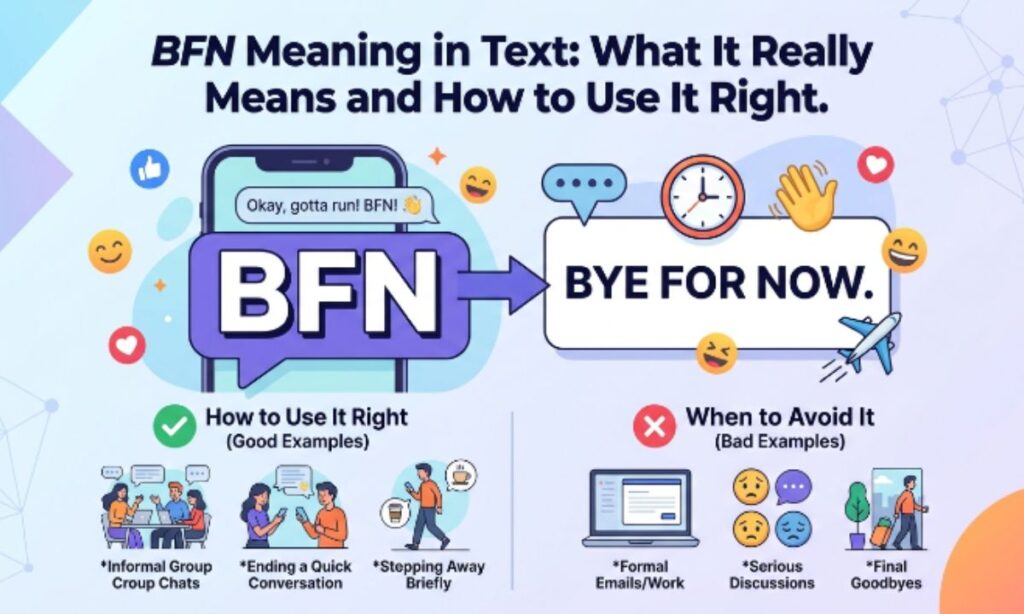
BFN stands for “Bye For Now.” It’s a short, casual way of ending a conversation without making it sound final or cold.
Think of it as the texting equivalent of waving goodbye at the end of a coffee date, fully expecting to see that person again soon. It’s not “goodbye forever.” It’s “I’m stepping away, but this isn’t over.”
People typically use BFN when they:
- Need to leave a chat suddenly (work, class, family calling)
- Want a lighter alternative to a flat “bye”
- Are wrapping up a call, comment thread, or DM conversation
- Want to signal they’ll be back later, without giving an exact time
Because it doesn’t commit to a specific return time (unlike BRB, which implies “in a few minutes”), BFN feels relaxed and open-ended. It’s the digital version of “catch you later” — friendly, unbothered, and easy to send without overthinking it.
Where Did BFN Come From?
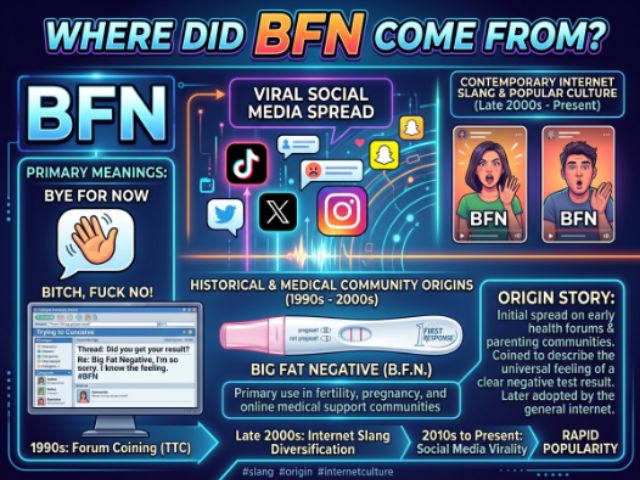
BFN didn’t appear out of nowhere. It grew naturally out of early internet chat culture, back when speed and character limits actually mattered.
Its roots trace back to:
- AOL Instant Messenger (AIM) and early chatrooms in the late 1990s
- IRC (Internet Relay Chat), where quick exits were part of the culture
- Early SMS texting, when messages were capped at 160 characters
Back when people paid for dial-up internet by the minute, shaving off a few keystrokes actually saved time and money. Abbreviations like BFN, BRB (Be Right Back), and TTYL (Talk To You Later) became the fastest way to leave a conversation politely instead of just vanishing.
Over the years, BFN moved from chatrooms into SMS, then into modern messaging apps like WhatsApp, iMessage, Instagram DMs, and Snapchat — carrying the same core meaning the entire way.
You may also spot close variations such as:
- B4N — an alternate spelling using “4” instead of “for”
- BB4N — “Bye Bye For Now,” a slightly more affectionate version
- BFNR — “Bye For Now, Readers,” popular with bloggers and content creators signing off a post or video
BFN vs. Other Goodbye Abbreviations: A Quick Comparison
Texting has no shortage of goodbye shorthand, and it’s easy to mix them up. Here’s how BFN stacks up against the most common alternatives.
| Abbreviation | Full Meaning | Typical Time Away | Best Used When |
| BFN | Bye For Now | Unclear / open-ended | Ending a casual chat without a set return time |
| BRB | Be Right Back | Minutes | Stepping away briefly (bathroom, door, another tab) |
| TTYL | Talk To You Later | Later today or soon | Ending a chat but planning to continue later |
| GTG / G2G | Got To Go | Immediate | Leaving suddenly, often urgently |
| AFK | Away From Keyboard | Minutes | Common in gaming and live chats |
| CYA | See You (Around) | Unclear | Casual, sometimes final-sounding goodbye |
The key difference is tone and commitment. BRB and AFK promise a quick return. TTYL suggests you’ll reconnect soon. BFN sits comfortably in the middle — it’s warm, but it doesn’t pin you down to a timeframe.
Real-Life Examples of BFN in Conversations
Seeing BFN used in context makes it far easier to remember. Here are a few natural examples across different situations:
- Ending a work chat: “Gotta jump on a call — BFN!”
- Leaving a group chat: “This was fun, talk soon. BFN 👋”
- Wrapping up a DM: “Mom’s calling me again lol, BFN!”
- Signing off social content: “That’s it for today’s post — BFN, see you tomorrow.”
- Casual texting between friends: “Heading to bed, BFN!”
In every case, BFN signals a temporary pause, not an ending. Nobody reading these messages thinks the sender is upset or cutting them off — it reads as friendly and low-pressure.
When Should You Use BFN?
BFN works best in relaxed, informal settings. It fits naturally into:
- Texts with friends and family
- Group chats
- Social media comments and DMs
- Gaming chats
- Casual work Slack or Teams messages (with people you’re comfortable with)
It’s less suited for:
- Formal emails
- First-time professional contact
- Customer service conversations
- Any message where clarity and professionalism matter more than tone
If you’re unsure whether a situation is casual enough for BFN, a simple test helps: would you say “catch you later” out loud to this person? If yes, BFN fits right in.
Read More:Exploring GoralBlue.com: A Powerful Guide 2026
What Does BFN Mean in Zepeto
Zepeto is a popular avatar-based social app where users hang out in virtual rooms, join group chats, and interact through customized characters. Slang travels fast inside these spaces, and BFN is no exception.
On Zepeto, BFN carries the exact same meaning as everywhere else: “Bye For Now.” Users type it when they’re:
- Leaving a virtual hangout or group room
- Stepping out of a chat but planning to log back in later
- Ending a conversation politely instead of just closing the app
Typing BFN before leaving keeps the interaction polite and avoids what many Zepeto users call “ghosting” a room — disappearing without any warning. It’s a small courtesy that keeps virtual friendships feeling respectful, even in a space built entirely around avatars.
You’ll also see close cousins of BFN inside apps like Zepeto, such as GFN (“Gone For Now”), which carries a nearly identical meaning but leans slightly more modern among younger users.
Common Mistakes People Make With BFN
Even a simple abbreviation like BFN trips people up sometimes. Here are the most frequent mix-ups:
- Using it in formal writing. BFN has no place in a professional email or business message. Stick to “Best regards” or “Talk soon” instead.
- Confusing it with BFF. These two abbreviations look nothing alike in meaning, but visually similar letters cause mix-ups (more on this below).
- Assuming it’s rude. BFN is not dismissive. It’s simply casual — context and tone (like an emoji) usually make that clear.
- Expecting an exact return time. Unlike BRB, BFN doesn’t promise “two minutes.” Don’t read it as a countdown.
- Overusing it in serious conversations. If someone is upset or the topic is sensitive, ending with a breezy “BFN” can feel out of place.
Does BFN Have Any Other Meanings?
Yes — like most three-letter abbreviations, BFN isn’t tied to a single definition. Context decides which meaning applies.
| Meaning | Where It’s Used |
| Bye For Now | General texting, social media, chat apps (most common) |
| Big Fat Negative | Fertility and pregnancy-test communities, referring to a negative test result |
| Butt F*** Nowhere | Slang for an extremely remote or middle-of-nowhere location |
| Big For Nothing | Regional slang describing someone all bulk, no substance |
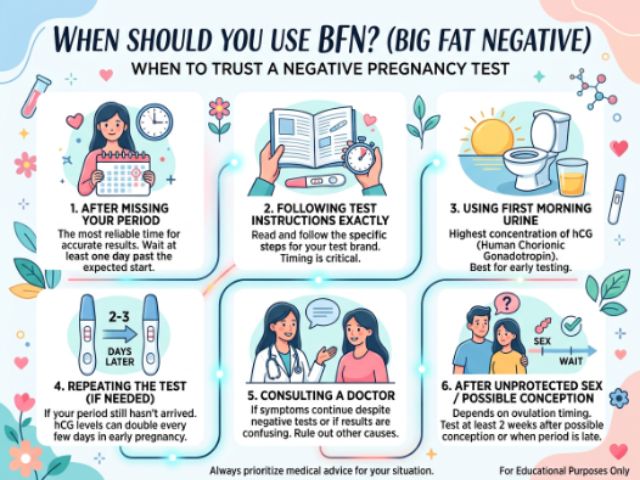
In fertility forums and TTC (“trying to conceive”) communities, BFN is especially common and refers to a negative home pregnancy test — the opposite of BFP (“Big Fat Positive”). If you ever see BFN used outside of a casual goodbye context, the surrounding conversation will almost always make the intended meaning obvious.
BFN vs. BFF: Why People Mix These Up
BFN and BFF share two letters and a similar shape, which is exactly why people confuse them at a glance — especially when skimming a message quickly.
- BFN = Bye For Now (a way to leave a conversation)
- BFF = Best Friend Forever (a way to describe a relationship)
They aren’t related in meaning at all. One is an exit line; the other is a label for a close friendship. If a message doesn’t make sense with one definition, try swapping in the other — it usually clears things up immediately.
Which One Should You Use: BFN, TTYL, or BRB?
Choosing between these three comes down to how long you’ll actually be gone and how casual the moment feels.
| Situation | Best Choice | Why |
| Leaving for the whole day | BFN | Open-ended, no time pressure |
| Stepping away for a few minutes | BRB | Signals a quick return |
| Ending chat, planning to reconnect later | TTYL | Implies you’ll pick the conversation back up |
| Unsure how long you’ll be gone | BFN | Flexible and low-commitment |
If you want the safest, most universally understood option for a general goodbye, BFN is hard to beat — it works in almost any casual scenario without overpromising a return time.
Is BFN Still Used Today?

Yes. Despite its roots in 1990s chatrooms, BFN hasn’t faded out. It’s still active across:
- Text messages
- WhatsApp and iMessage
- Instagram and Snapchat DMs
- Gaming chats and virtual apps like Zepeto
- Blog and video sign-offs (as BFNR)
It has simply aged alongside the internet. Older users who grew up with AIM still use it out of habit, while younger users pick it up naturally because it still gets the job done in one quick word.
A Quick Note on Tone: Does BFN Feel Distant?
Not at all — when used correctly. BFN is designed to feel warm, not cold. The “for now” part is doing a lot of quiet work: it tells the other person this isn’t a real ending, just a pause.
That said, tone can shift depending on:
- Punctuation: “BFN.” can read flatter than “BFN!” or “bfn 😊”
- Timing: Sending it mid-argument can feel like an abrupt exit, even if that’s not the intent
- Relationship: Between close friends, it reads as playful. With someone new, it can feel slightly casual for the moment
When in doubt, adding a small emoji or a few extra words (“BFN, talk soon!”) softens the tone and removes any chance of it feeling dismissive.
Frequently Asked Questions About BFN
What does BFN mean in a text message?
BFN means “Bye For Now” — a casual, temporary way to end a conversation.
Is BFN rude to use?
No. It’s considered friendly and informal, not disrespectful, especially between people who know each other.
Can I use BFN in professional emails?
It’s best avoided in formal writing. Stick to standard closings like “Best regards” instead.
What’s the difference between BFN and BRB?
BRB implies a quick return in minutes, while BFN doesn’t specify any timeframe.
Does BFN mean the same thing in Zepeto?
Yes, on Zepeto it still means “Bye For Now,” used when leaving a virtual room or chat.
Is BFN the same as BFF?
No. BFF means “Best Friend Forever,” describing a relationship, not a goodbye.
What does BFN mean outside of texting slang?
In pregnancy and fertility communities, BFN can mean “Big Fat Negative,” referring to a negative test result.
Is BFN still popular in 2026?
Yes, it remains common across texting, social media, and gaming chats, even decades after it first appeared.
Final Thoughts
BFN is proof that some internet habits never really go out of style. Born in an era of dial-up chatrooms and character-limited texts, it has quietly survived every messaging trend since — because it does exactly what it needs to do: end a conversation gently, without slamming the door shut.
Next time you see “BFN” pop up in a chat, you’ll know exactly what it means, where it came from, and how to reply without a second thought. And if you decide to use it yourself, you’ll know it’s landing exactly the way you intend — casual, friendly, and open to picking things back up whenever you’re both ready.
Leave a Reply