Compassion Meaning: Definition, Examples, Benefits & Why It Matters
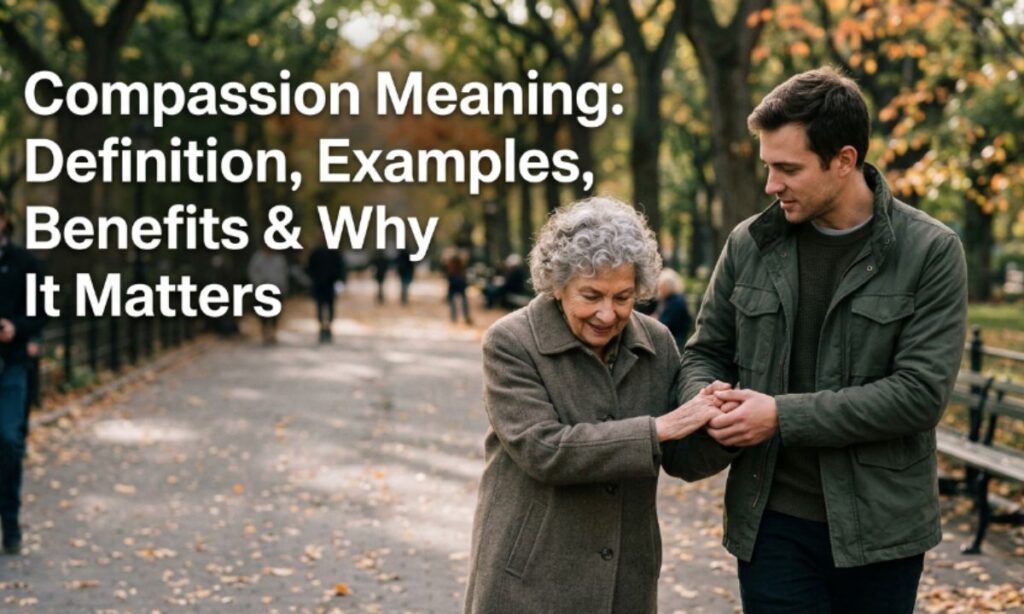
Compassion is one of those words we use often but rarely stop to unpack. We say someone acted “with compassion,” or we hope for a more compassionate world — but what does compassion actually mean, and why does it matter so much in our daily lives, relationships, and even our health?
This guide breaks down the true meaning of compassion, how it differs from empathy and sympathy, the science behind its benefits, and simple, practical ways to build more of it into your everyday life.
What Does Compassion Really Mean?
At its core, compassion means recognizing someone else’s pain and feeling a genuine desire to help ease it. It’s not just noticing suffering — it’s being moved by it enough to act.
Psychologists often describe compassion as having three connected parts:
- Noticing : becoming aware that someone (including yourself) is struggling
- Feeling : an emotional response of warmth, care, or concern
- Responding : taking action, however small, to help relieve that suffering
Compassion isn’t pity, and it isn’t just feeling sorry for someone. Pity keeps distance; compassion closes it. When you’re compassionate, you meet another person’s pain with warmth rather than judgment, and you’re willing to do something about it — a kind word, a helping hand, or simply staying present with someone in a hard moment.
Compassion vs. Empathy vs. Sympathy: What’s the Difference?
These three words get used interchangeably, but they describe different emotional experiences. Understanding the distinction helps clarify why compassion is often considered the most action-oriented of the three.
| Term | Core Meaning | Example |
| Sympathy | Feeling concern for someone’s suffering, from a distance | “I’m so sorry you’re going through that.” |
| Empathy | Feeling as someone — sharing or imagining their emotional experience | Actually sensing their sadness as your own |
| Compassion | Feeling for someone’s suffering, combined with a genuine motivation to help | Sitting with a grieving friend and offering practical support |
In simple terms: sympathy is emotional distance, empathy is emotional connection, and compassion is empathy plus action. You can feel empathy without doing anything about it — compassion is what turns that feeling into helpful behavior.
The Root Origins of the Word “Compassion”

The word “compassion” comes from the Latin com- (meaning “with” or “together”) and pati (meaning “to suffer”). Put together, compassion literally translates to “to suffer with.”
This origin tells us something important: compassion was never meant to be a passive feeling. It implies standing alongside someone in their difficulty rather than observing it from afar. Interestingly, the English word “patient” shares the same Latin root — a person who endures suffering — which highlights just how deeply compassion is tied to the human experience of pain and healing.
Types of Compassion You Should Know
Compassion isn’t a single, one-size-fits-all emotion. Researchers and mindfulness teachers typically break it down into a few distinct forms:
1. Self-Compassion
Treating yourself with the same kindness and understanding you’d offer a friend, especially during failure or hardship.
2. Compassion for Others
The classic form — feeling moved by another person’s suffering and wanting to help relieve it.
3. Compassionate Empathy
A blend of understanding someone’s emotional state and taking meaningful action to support them, rather than only feeling their pain.
4. Global or Universal Compassion
Extending care beyond your immediate circle to strangers, communities, or even all living beings — a concept central to many spiritual and philosophical traditions, including Buddhism.
5. Tonglen or Contemplative Compassion
A meditative practice (rooted in Tibetan Buddhism) of consciously breathing in others’ suffering and breathing out relief, used to cultivate compassion intentionally.
Real-Life Examples of Compassion in Action
Compassion doesn’t always look dramatic. Often, it shows up in small, everyday moments:
- Checking in on a coworker who seems overwhelmed and offering to help with their workload
- Letting a stressed-out driver merge into traffic instead of speeding up
- Sitting quietly with a friend who’s grieving, without trying to “fix” everything
- Donating time or money to a cause that helps people you’ll never meet
- A nurse taking extra time to comfort a frightened patient before a procedure
- Forgiving someone who hurt you because you understand they were struggling too
- Volunteering at a shelter, food bank, or crisis hotline
- Simply asking “Are you okay?” and actually listening to the answer
These examples share one thing in common: they move beyond noticing pain into actually easing it.
Why Compassion Matters in Everyday Relationships
Compassion is often called the glue that holds relationships together — and for good reason. In friendships, marriages, and families, compassion helps people:
- Feel truly seen and understood, not just heard
- Navigate conflict without turning disagreements into attacks
- Rebuild trust after mistakes or misunderstandings
- Support each other through hardship without judgment
- Create emotional safety, where vulnerability feels okay
Relationships without compassion tend to become transactional or defensive. But when compassion is present, people feel safe enough to be honest, make mistakes, and grow — which is often what separates relationships that last from those that quietly fall apart.
The Science-Backed Benefits of Being Compassionate
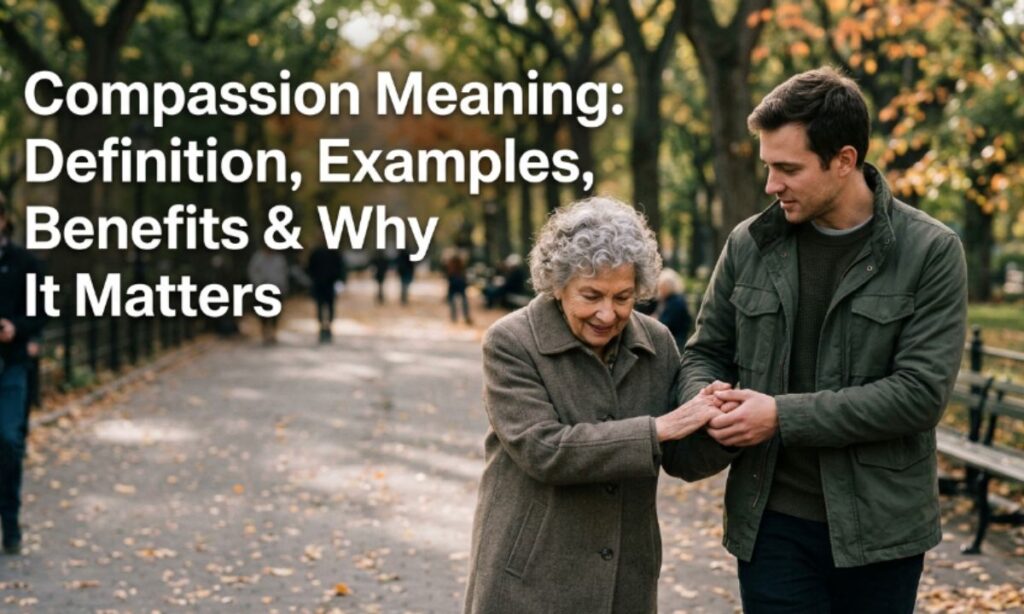
Compassion isn’t just a “nice to have” trait — research consistently links it to measurable benefits for both the giver and receiver.
Benefits of practicing compassion include:
- Lower levels of stress hormones like cortisol
- Increased activity in brain regions associated with reward and connection
- Higher life satisfaction and sense of purpose
- Stronger social bonds and support networks
- Greater emotional resilience during hard times
- Reduced symptoms of anxiety and depression
- Improved immune system function over time
Interestingly, studies on compassion training programs — such as Compassion-Focused Therapy and loving-kindness meditation — show that compassion can actually be trained like a skill, not just something people are born with more or less of.
Read More: Next of Kin Meaning: Definition, Examples, Legal Rights & Who Qualifies
How Compassion Improves Mental and Physical Health
The mind-body connection plays a big role in why compassion is so beneficial.
Mental health effects:
- Reduces rumination and self-critical thinking patterns
- Buffers against burnout, especially in caregiving professions
- Increases feelings of connectedness, which combats loneliness
Physical health effects:
- Lower blood pressure and heart rate variability improvements
- Reduced inflammation markers linked to chronic stress
- Better sleep quality, since compassionate people tend to carry less unresolved emotional tension
Acts of compassion also trigger the release of oxytocin, sometimes called the “bonding hormone,” which promotes feelings of trust, calm, and connection — both in the person giving compassion and the person receiving it.
Compassion in the Workplace: Why Leaders Need It
Compassionate leadership isn’t about being “soft” — it’s a practical leadership strategy backed by strong outcomes.
Leaders who lead with compassion tend to see:
- Higher employee engagement and retention
- Increased trust and open communication within teams
- Reduced burnout and absenteeism
- Better performance during high-stress periods or organizational change
- Stronger collaboration across departments
Compassionate workplaces aren’t ones that avoid accountability — they’re ones where feedback, boundaries, and expectations are delivered with respect and understanding rather than fear. Employees who feel genuinely cared for are more likely to bring their best effort, creativity, and loyalty to their work.
Self-Compassion: Why It’s Just as Important as Compassion for Others
Many people find it easier to be kind to others than to themselves. But self-compassion — treating yourself with the same warmth you’d offer a struggling friend — is essential for long-term wellbeing.
Self-compassion generally involves three components:
- Self-kindness : being gentle with yourself instead of harshly self-critical
- Common humanity : recognizing that struggle and imperfection are part of being human, not a personal failure
- Mindfulness : acknowledging painful feelings without suppressing or exaggerating them
People who practice self-compassion tend to experience lower anxiety, greater motivation after setbacks, and healthier relationships — because it’s difficult to sustain genuine compassion for others while constantly being cruel to yourself.
Simple Ways to Practice Compassion Daily
Building compassion doesn’t require grand gestures. Small, consistent habits make the biggest difference over time.
- Practice active listening — put away distractions and truly focus on the person speaking
- Pause before judging — ask “What might this person be going through?” before reacting
- Do one small kind act daily — a compliment, a favor, or checking in on someone
- Volunteer regularly, even if it’s just an hour a month
- Practice loving-kindness meditation to strengthen compassionate thinking
- Extend patience to strangers, especially in frustrating situations like traffic or long lines
- Talk to yourself like you would a friend when you make a mistake
- Ask better questions, like “How are you really doing?” instead of surface-level small talk
Compassion, like any skill, strengthens the more it’s practiced.
How to Raise Compassionate Kids in a Busy World

Children learn compassion largely by watching the adults around them — but intentional habits can accelerate that development.
- Model compassionate behavior : kids absorb far more from what you do than what you say
- Name emotions out loud : helping children label feelings (their own and others’) builds emotional awareness
- Encourage perspective-taking : ask “How do you think they felt?” after conflicts or stories
- Praise kindness specifically : reinforce compassionate actions when you see them
- Involve kids in giving back : donating toys, volunteering as a family, or helping a neighbor
- Read stories with compassionate characters : literature is a powerful tool for building empathy in children
- Avoid shaming mistakes : teach accountability with warmth, not fear
In a world that often moves fast and rewards competition, intentionally teaching compassion gives children an emotional foundation that benefits them for life.
Conclusion
Compassion means far more than feeling sorry for someone — it’s the willingness to notice pain, feel moved by it, and respond with genuine care and action. Rooted in the idea of “suffering with” another person, compassion strengthens relationships, improves mental and physical health, transforms workplaces, and shapes emotionally healthy children.
The best part is that compassion isn’t a fixed trait — it’s a skill anyone can build. Whether it’s through small daily habits, mindful self-talk, or simply choosing patience over judgment, every act of compassion — toward others and yourself — makes the world a little softer and a little more connected.
Frequently Asked Questions
What is the simplest definition of compassion?
Compassion is noticing someone’s suffering and feeling motivated to help ease it, rather than just observing it from a distance.
Is compassion the same as kindness?
Not exactly — kindness is a broader trait, while compassion specifically involves responding to someone’s pain or hardship.
Can compassion be learned?
Yes. Studies show compassion can be strengthened through practices like meditation, active listening, and intentional daily habits.
What is the difference between compassion and empathy?
Empathy is sharing someone’s feelings, while compassion adds the desire and action to help relieve their suffering.
Why is self-compassion important?
Self-compassion helps reduce anxiety, supports emotional resilience, and makes it easier to sustain genuine compassion for others.
Leave a Reply