The Flying Elephant: Memoirs of an Olympic Champion — A Journey Beyond Dreams (2026)

Sports memoirs come and go, but every so often one lands that feels different — grounded, honest, and quietly powerful rather than loud and self-congratulatory. The Flying Elephant: Memoirs of an Olympic Champion by Alexander Savin is exactly that kind of book. It doesn’t open with trophies. It opens with the grind that made the trophies possible.
If you’ve searched for this title, you’re probably trying to figure out who Alexander Savin actually is, why the book carries such an unusual name, and whether the lessons inside still matter in 2026. This guide answers all of that in one place — no fluff, just the details that matter.
What Is The Flying Elephant: Memoirs of an Olympic Champion?

The Flying Elephant: Memoirs of an Olympic Champion is an autobiographical work by Alexander Savin, one of the most successful volleyball players of the Soviet era. Rather than being a simple highlight reel of medals and championship moments, the book leans into something rarer: the internal experience of chasing greatness inside one of the most disciplined sporting systems the world has ever seen.
The memoir was published in October 2025 as a Kindle edition, covering Savin’s journey from youth sport in the Soviet Union through his Olympic career, his post-playing coaching work, and the teammates and staff who shaped Soviet volleyball’s golden era. It includes over 240 photographs pulled from personal and Soviet-era archives, and was translated into English by a small team of translators.
What sets this book apart from typical athlete autobiographies is its tone. It isn’t written as a victory lap. The writing style is introspective rather than strictly chronological — Savin revisits key moments and explains the thought process behind them rather than simply listing what happened.
In short, this is less “here’s what I won” and more “here’s what it actually took, and what it cost.”
Who Is Alexander Savin?

Before diving deeper into the memoir itself, it helps to understand the man behind it.
Alexander Savin was born on July 1, 1957, in Taganrog, a city in Russia’s Rostov region. Standing 200cm tall, he built his career as a middle blocker for the USSR national volleyball team. His national team career ran from 1975 to 1986, a span that eventually earned him induction into the Volleyball Hall of Fame in 2010.
Here’s a quick snapshot of his career highlights:
| Career Detail | Information |
| Full Name | Alexander Savin |
| Born | July 1, 1957, Taganrog, Russia |
| Position | Middle Blocker |
| Height | Approximately 200–206 cm |
| National Team Span | 1975–1986 |
| 1976 Montreal Olympics | Silver medal |
| 1980 Moscow Olympics | Gold medal |
| Hall of Fame Induction | International Volleyball Hall of Fame, October 2010 |
| Club Career | CSKA Moscow |
| Nickname | “The Flying Elephant” |
He won silver in 1976, playing all five matches, before returning four years later to win gold in Moscow, playing all six matches. Beyond the Olympics, he was also a six-time World League champion, with titles across 1975, 1977, 1979, 1981, 1983, and 1985, and he collected eleven major international gold medals over the course of his career.
He’s widely regarded as one of the best middle blockers in the sport’s history, and his legacy extends well past his playing days into coaching and mentorship roles within Russian volleyball.
The Story Behind the Title: Why “The Flying Elephant”?
This is easily the most searched question connected to the book, and for good reason — the title doesn’t explain itself at first glance.
According to multiple accounts, the nickname was given to Savin by the Italian sports publication La Gazzetta dello Sport. The logic behind it is simple once you see him play: a man built like a tower, moving like someone half his size.
With a standing reach of roughly 300 centimeters and a vertical jump of 92 centimeters, Savin was one of the highest-jumping players of his era. The nickname is symbolic rather than literal — it represents something that seems impossible yet becomes real through discipline, training, and belief.
Think about it this way:
- Elephant = size, power, physical dominance
- Flying = speed, elevation, grace that shouldn’t logically belong to something that large
- Together = a contradiction that becomes true through relentless repetition
That contradiction isn’t just a fun nickname — it becomes the thematic backbone of the entire memoir. The book essentially argues that discipline is what turns the physically improbable into the completely normal.
Summary of The Flying Elephant: Memoirs of an Olympic Champion
At a high level, the memoir moves through several connected phases of Savin’s life:
- Early life and discovery : how a tall, athletic kid from the Rostov region was spotted by coaches and funneled into the Soviet sports development system.
- Rise through CSKA Moscow : training at one of the country’s most competitive clubs, surrounded by elite talent.
- The 1976 Montreal heartbreak : the silver medal that stung more than it satisfied.
- The road to 1980 : four years of relentless preparation building toward the Moscow Games.
- Olympic gold on home soil : the pressure, the politics, and the payoff.
- Life after competition : the transition into coaching, mentorship, and reflection.
Rather than reading like a timeline, the book is structured around themes — pressure, teamwork, doubt, and growth — which gives it more emotional weight than a standard “and then this happened” sports biography.
Alexander Savin’s Volleyball Career in Detail
Savin’s rise wasn’t instant. His childhood in the Soviet Union involved broad exposure to multiple sports, which helped build his foundational coordination before volleyball became his focus. Coaches at a local sports school eventually noticed his height and quick reflexes, a discovery that changed the direction of his life. From there, he moved to CSKA Moscow, the top sports club in the country, where he trained against the best players available and began his climb toward the world stage.
The two Olympic tournaments that define his career tell very different stories:
1976 Montreal Olympics
The Soviet team arrived as favorites but returned home with only silver — a result that stung enough to become motivation for the next four years.
1980 Moscow Olympics
Playing on home soil brought enormous pressure, especially with several nations boycotting the Games that year, yet the competition remained fierce. In the final against Bulgaria, the Soviet Union won 3-1, and Savin finally reached the top of the podium.
Between 1977 and 1983, Savin’s teams were considered nearly unbeatable — a stretch experts still refer to as the Golden Age of Soviet volleyball.
Training Methods That Built an Olympic Champion
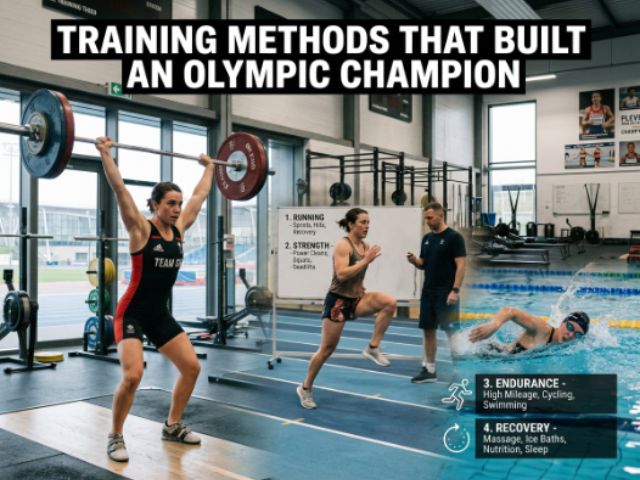
One of the memoir’s biggest draws for athletes and coaches is its detailed look at Soviet-era training culture. Much of the book centers on the demanding routines associated with CSKA Moscow and the USSR national program, presenting structured, repetitive training not as a footnote but as the actual engine behind Olympic-level performance.
Key training principles referenced throughout the book include:
- Repetition over improvisation : mastering fundamentals until they became automatic
- Explosive power development : rigorous, repetitive drills focused on explosive power that eventually helped him master his center of gravity
- Timing precision : a sophisticated timing technique that allowed him to wait for the setter’s move before launching into the air
- Patient, long-term coaching : a period heavily documented in the book that highlights the importance of patient coaching within the Soviet sports system
None of this was glamorous. It was early mornings, corrected form, and drills repeated far past the point of boredom — the unseen labor behind every highlight-reel spike.
Mental Toughness Lessons from The Flying Elephant Memoirs of an Olympic Champion
Physical training only tells half the story. The memoir spends significant space on the psychological side of elite competition.
Some of the recurring mental toughness themes include:
- Turning failure into fuel : the 1976 silver medal loss becoming a driving force rather than a source of shame
- Managing home-crowd pressure : competing at the 1980 Moscow Games with an entire nation watching
- Staying composed under scrutiny : performing at a high level even when expectations were suffocating
- Separating identity from outcome : learning that self-worth couldn’t be tied entirely to results
At its core, the memoir explores the psychology of becoming an Olympic-level athlete and the cost that journey demands, making it as much a book about mindset as it is about sport.
Teamwork and Leadership in Elite Volleyball

Volleyball is inherently a team sport, and Savin’s memoir reflects that reality rather than centering entirely on personal glory. Unlike memoirs focused mainly on personal fame, Savin emphasizes teamwork, coaching, and collective achievement — a focus that sets the book apart from typical individual-glory-driven Olympic memoirs.
Read More: Host Gimkit: Easy Steps to Launch Your First Game in 2026
The book spends real time on team dynamics, describing how camaraderie and shared sacrifice shaped a roster that dominated international volleyball from the late 1970s into the early 1980s.
Leadership lessons drawn from this section of the book include:
| Leadership Principle | How It Shows Up in the Memoir |
| Shared accountability | Success and failure treated as team outcomes, not individual scorecards |
| Trust-building | Long training hours together building on-court chemistry |
| Quiet leadership | Leading through consistency rather than loud gestures |
| Mentorship | Veteran players guiding younger teammates through pressure moments |
The Olympic Environment and Cold War Sports Culture
Part of what makes this memoir historically valuable is the era it captures. Savin’s career is strongly associated with the disciplined sports environment of CSKA Moscow, one of the most influential training institutions in Soviet athletics, and his story overlaps with the 1980 Summer Olympics — a defining moment in volleyball history.
The memoir captures this “golden era” in detail, highlighting tactical discipline, team coordination, and the intense rivalry that defined Cold War-era sport. Readers get a rare glimpse into what it meant to represent a superpower on the world stage during a politically charged period — where sporting success was tied to national identity in a way that modern athletes rarely experience.
Coaching Philosophies Featured in The Flying Elephant Memoirs of an Olympic Champion
After his playing career ended, Alexander Savin transitioned into coaching and mentorship, and the memoir highlights how Soviet coaching methods went on to influence modern volleyball training approachest
Some coaching philosophies that surface repeatedly in the book:
- Discipline before talent : raw ability means little without structure
- Correction without discouragement : pushing athletes hard while keeping them motivated
- Long-term development : building athletes over years, not weeks
- Team-first coaching : prioritizing collective chemistry over individual stardom
The memoir reveals rare insider stories from CSKA Moscow and the USSR national team, along with portraits of teammates and staff who are otherwise largely forgotten in Western sports writing.
Historical Value of The Flying Elephant
Beyond its personal storytelling, the book functions as a historical document. It documents the demanding journey from a young athlete with big dreams to one of volleyball’s most accomplished players, giving readers a detailed account of life inside one of the world’s most successful athletic programs of the twentieth century.
Unlike many modern athlete autobiographies that lean heavily into celebrity culture, Savin’s memoir centers on performance, growth, and dedication instead. That makes it a useful primary-source-style read for sports historians, not just casual fans.
Key Lessons Readers Can Learn from The Flying Elephant Memoirs of an Olympic Champion
You don’t need to be a volleyball player — or even a sports fan — to take something away from this book. The themes of resilience, leadership, teamwork, and personal growth appeal to readers well beyond the world of sports.
Practical lessons readers commonly point to:
- Consistency beats intensity : small daily repetitions compound into elite performance
- Setbacks can become fuel : the 1976 loss directly shaped the 1980 win
- Success is rarely solo : even individual brilliance depends on a strong system around you
- Pressure is manageable, not avoidable : composure is trained, not innate
- Identity should outlast achievement : who you are matters more than what you’ve won
Athletes in particular can learn the importance of disciplined practice, mental toughness, teamwork, adaptability, and lifelong improvement from Savin’s example.
Case Study: How Savin’s Journey Reflects High-Performance Principles
Looking at Savin’s career through a performance-science lens, a clear pattern emerges — one that mirrors what modern high-performance coaches still teach today.
| Phase | Principle Demonstrated | Modern Parallel |
| Youth discovery | Early identification of natural ability | Talent scouting in modern academies |
| CSKA Moscow training | Structured, repetitive skill-building | Deliberate practice theory |
| 1976 silver medal | Using failure as feedback | Growth mindset frameworks |
| 1977–1983 dominance | Sustained peak performance | Periodized training cycles |
| 1980 gold medal | Performing under extreme pressure | Sports psychology and pressure inoculation |
| Post-career coaching | Passing knowledge forward | Mentorship-driven organizational cultures |
While modern technology has added far more sophisticated tools to the sport, the core principles of discipline and analytical preparation that Savin championed are still taught in elite academies today.
How Accurate and Reliable Is The Flying Elephant: Memoirs of an Olympic Champion?
Because this is a first-person memoir, it’s worth addressing reliability directly.
- The book is written by Savin himself, giving it firsthand credibility rather than secondhand reporting.
- It offers an accessible way into a genuinely significant chapter of Olympic and volleyball history, told by someone who actually lived through it rather than someone writing about it from a distance.
- For verifiable career statistics, readers can cross-reference official archives such as the FIVB and international sports encyclopedias alongside the memoir’s own accounts.
- Like most memoirs, some sections lean on personal interpretation and memory rather than strict documentation — which is expected of the genre and doesn’t diminish its emotional or historical value.
In short: reliable as a personal account, and useful as a supplementary historical resource when paired with official records.
Why The Flying Elephant Remains Relevant in 2026
Alexander Savin’s experiences demonstrate that sustained excellence comes from disciplined preparation, resilience, effective coaching, and strong teamwork rather than talent alone. That message hasn’t aged, even though the sporting world around it has changed dramatically since the 1980s.
While the memoir is rooted in a specific historical era, its lessons continue to resonate because the foundations of achievement haven’t changed. In a 2026 landscape saturated with quick-fix productivity advice and shortcut culture, a book built entirely around patience and repetition feels almost countercultural — and that’s exactly why it still lands.
The Flying Elephant and Its Place in Sports Literature
Where does this book fit among other athlete memoirs? Books like this matter because they show that elite sportsmen aren’t just well-oiled competition machines — they’re people carrying pressures most spectators never see. Literature like this also draws attention to something often overlooked: successful Olympic performance is typically the product of years of invisible work.
Because volleyball is fundamentally a team sport, the memoir also gives readers a strong understanding of just how essential cooperation, communication, and strategy really are at the elite level. That combination — personal vulnerability plus systemic insight — is what earns it a respected spot alongside other notable Olympic-era sports autobiographies, rather than getting lost among typical celebrity-driven sports books.
Conclusion
The Flying Elephant: Memoirs of an Olympic Champion isn’t just a nostalgic look back at Soviet volleyball glory — it’s a detailed, honest account of what real excellence actually costs. Alexander Savin’s journey from a tall kid in Taganrog to an Olympic gold medalist wasn’t built on talent alone. It was built on repetition, resilience, strong coaching, and a team willing to sacrifice together.
For readers in 2026, the book offers something increasingly rare: proof that patient, disciplined effort still works, even in a world obsessed with instant results. Whether you’re an athlete, a coach, or simply someone chasing a difficult goal, Savin’s story is a reminder that the impossible often just needs more time and more discipline than we’re willing to give it.
Frequently Asked Questions
Who is Alexander Savin?
Alexander Savin is a Soviet-era volleyball player who won silver at the 1976 Montreal Olympics and gold at the 1980 Moscow Olympics as a middle blocker.
Why is Alexander Savin called “The Flying Elephant”?
The nickname, given by an Italian sports publication, reflects the contrast between his large physical build and his unusually powerful, graceful vertical leap.
What is The Flying Elephant: Memoirs of an Olympic Champion about?
It’s Savin’s autobiographical memoir covering his rise through Soviet volleyball, his Olympic career, and his later transition into coaching.
When was the memoir published?
The Kindle edition of the book was published in October 2025.
Is the book only for volleyball fans?
No. Its themes of resilience, teamwork, and mental toughness appeal to a much wider audience than just sports fans.
Leave a Reply