What Does Opps Mean in Slang? Texting & Social Media Guide
If you’ve scrolled through TikTok, Instagram, or a group chat lately, chances are you’ve spotted the word “opps” floating around captions, comments, or texts. It shows up in memes, rap lyrics, Snapchat stories, and casual conversations between friends — sometimes joking, sometimes dead serious.
But what does opps actually mean? And why has this short slang word become such a staple of modern internet language?
This guide breaks down everything you need to know: the meaning, the tone shifts, real examples, how to reply, who uses it, and where it came from. By the end, you’ll never be confused by “opps” again.
What Does Opps Mean in Text
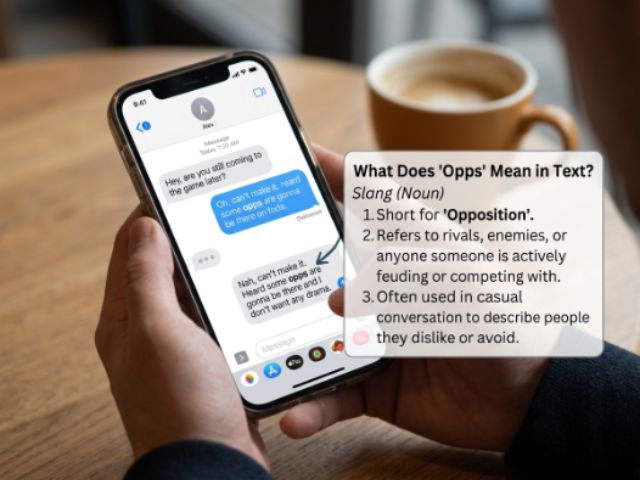
In texting, opps is slang for opponents, rivals, or enemies. It’s short for “opposition,” and people use it to describe anyone they’re in conflict with — whether that’s a real rival, a hater, or just someone being annoying.
The word can be spelled a few different ways:
- Opp : singular, referring to one rival or enemy
- Opps : plural, referring to multiple rivals, or used generally as a catch-all term
- Ops : a common shorthand or typo variation, though “ops” also has separate meanings (like “opinions” on Snapchat or “operations”)
In a text message, “opps” almost always points back to the idea of opposition. Someone might text:
- “He’s not my friend, he’s an opp.”
- “Stay away from my opps.”
- “That whole group is opps to me.”
The tone can range from lighthearted teasing to genuinely serious, depending on who’s texting and why.
What Does Opps Mean on Snapchat
On Snapchat, “opps” typically keeps its core meaning of rivals or enemies, but it often shows up in a more casual, dramatic, or joking way in story captions and private snaps.
You might see:
- A caption on a Snap story saying “surrounded by opps 😭” (usually a joke about being at school, work, or a family event)
- A friend snapping “watch out for opps tonight” before a party
- Someone using it to playfully call out a friend who did something annoying, like “you’re an opp for that”
It’s worth noting that Snapchat also has a similar-looking term, “ops,” which usually means something different — it’s shorthand for “opinions,” used when someone wants followers to share honest thoughts on their story. Context is everything: “opps” (with two P’s) usually means rivals, while “ops” on a Snapchat story is more often about opinions.
Meaning & Explanation of Opps in Slang
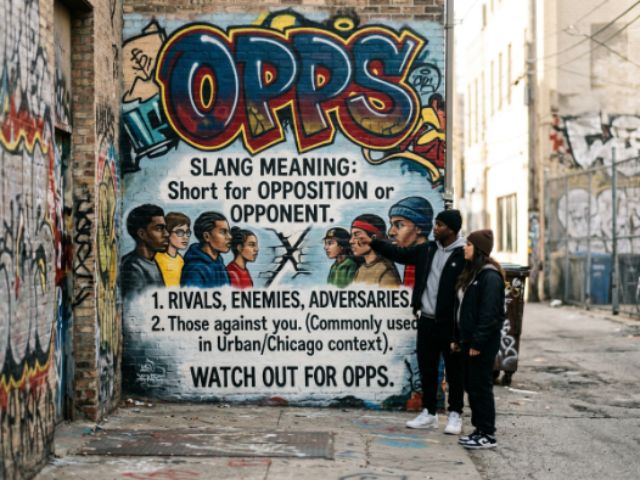
At its root, “opps” comes from the word “opposition.” The term originated in street culture and hip-hop, where it referred to rival gang members, competitors, or people in genuine conflict situations.
Over time, the meaning expanded far beyond its original, more serious context. Today, “opps” is used in three broad ways:
- Literal enemies or rivals : people you’re genuinely not on good terms with
- Jokey exaggeration : calling a friend, sibling, or coworker an “opp” for a minor annoyance
- Group identity : referring to an entire rival group, school, team, or fanbase as “the opps”
Because slang spreads so quickly through social media, the word has been softened in many everyday conversations. A teenager might call a strict teacher their “opp” simply for assigning homework — not because there’s any real hostility involved.
Quick Definition
| Term | Core Meaning | Common Spelling |
| Opp | One rival, enemy, or opponent | Singular |
| Opps | Multiple rivals, or general opposition | Plural |
| Ops | Often confused with “opps”; can also mean opinions, operations, or oops | Variant/typo |
Tone & Context Variations
Not every use of “opps” carries the same weight. The tone depends heavily on context, relationship, and platform.
Serious Tone
In some contexts — particularly in music, street culture, or heated arguments — “opps” refers to actual rivals or enemies, sometimes tied to real conflict. This usage is less common in everyday texting between friends but still appears in rap lyrics and certain online communities.
Playful or Joking Tone
Most day-to-day use of “opps” among teens and young adults is playful. Calling your best friend an “opp” for stealing your fries, or your mom an “opp” for grounding you, is meant as humor — not hostility.
Sarcastic Tone
Sometimes “opps” is used sarcastically to poke fun at someone being dramatic. For example, saying “the opps are here” when a group of coworkers walks into a meeting is clearly exaggerated for comedic effect.
Group or Team Rivalry Tone
In sports, gaming, or fandom contexts, “opps” can refer to an opposing team or rival fanbase, similar to how “the other side” or “the competition” might be used.
Real Chat Examples (Natural & Relatable)
Here are some realistic examples of how “opps” shows up in everyday texting and social media:
Example 1 – Friend group chat
Jordan: bro why is Mike acting like that
Sam: idk he’s been acting opp lately
Jordan: fr, he switched up
Example 2 – Sibling text
Sister: mom said no to the sleepover
Brother: she’s an opp today 😭
Example 3 – Snapchat story caption
“surrounded by opps at this family reunion 💀”
Example 4 – Sports rivalry
“Tonight we play the opps. Let’s go 🔥”
Example 5 – Playful callout
Friend 1: you told her what I said??
Friend 2: nah I would never
Friend 1: you’re opp behavior fr
These examples show how flexible the word is — it can appear in serious rivalry talk, sibling banter, sports hype, or friend-group drama.
How to Reply When Someone Says Opps
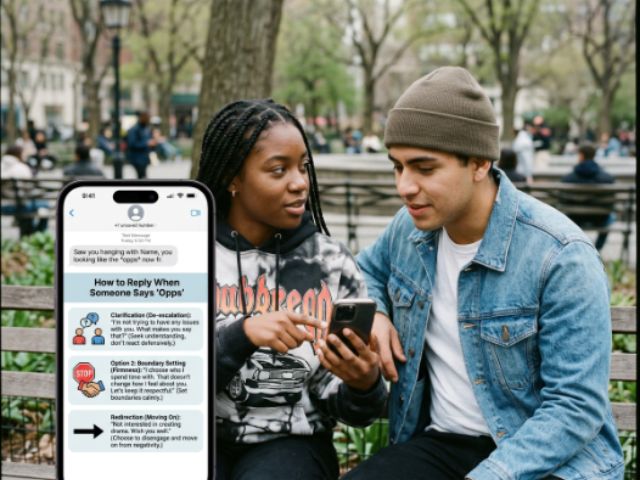
If someone calls you or someone else an “opp,” how you respond depends on the tone of the conversation. Here’s a simple guide:
- If it’s playful : Laugh it off or clap back with humor: “I’m not opp, I’m just built different” or “opp? me? never.”
- If it’s sarcastic : Match the energy: “lmaooo true, I really said that huh.”
- If it feels serious : Ask directly what they mean, or address the actual issue instead of the label itself.
- If you’re unsure of the tone : A simple “wait why am I an opp lol” can clear things up quickly.
The safest approach in most casual settings is to treat it as a joke unless there’s clear evidence the person means it seriously.
Comparison Table: Opps vs Similar Slang Terms
| Slang Term | Meaning | Typical Tone | Common Platform |
| Opps / Opp | Rivals, enemies, opposition | Serious to playful | TikTok, Instagram, texting |
| Ops (Snapchat) | Opinions | Casual, inviting feedback | Snapchat |
| Beef | Ongoing conflict or feud | Serious | Twitter/X, texting |
| Haters | People who dislike or criticize you | Dismissive, casual | Instagram, TikTok |
| Foes | Enemies (less commonly used now) | Neutral to serious | Gaming, older slang |
| NPC | Someone acting robotic or unoriginal | Joking, dismissive | TikTok, gaming |
This table highlights how “opps” fits into a broader family of slang describing conflict or social dynamics, while remaining distinct in tone and usage from similar-sounding terms.
Who Uses This Term?
“Opps” is most commonly used by:
- Gen Z and younger millennials, especially in casual texting and social media captions
- Hip-hop and rap artists, where the term has deep roots referencing real rivalries
- Gamers, using it to describe opposing players or teams
- Sports fans, referring to rival teams as “the opps”
- Teens joking with friends and family, using it in a lighthearted, exaggerated way
While the term started in more niche, street-culture spaces, it has become mainstream enough that people across many different online communities now use it — often without any serious connotation at all.
Read More: What Does MYF Mean in Text? Your Complete Guide (2026)
Why Is Opps Popular Online?
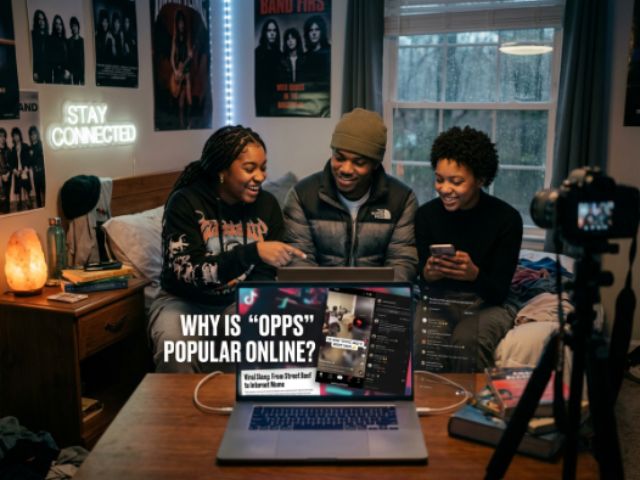
There are a few clear reasons “opps” caught on so widely:
- It’s short and punchy : Easy to type, easy to say, and fits perfectly into fast-paced texting and captions.
- Music influence : Rap and hip-hop lyrics helped popularize the word long before it became a texting staple.
- Meme culture : Once a slang term becomes meme-friendly, platforms like TikTok and Instagram accelerate its spread globally.
- Flexibility : The word works in serious, joking, sarcastic, and group contexts, making it useful in almost any conversation.
- Group identity : Referring to “the opps” creates a sense of us-vs-them, which fits naturally into fandoms, sports rivalries, and friend-group dynamics.
Because slang today spreads through short-form video and viral posts rather than just word-of-mouth, terms like “opps” can go from niche to mainstream in a matter of weeks.
Origin & Internet Culture Insight
“Opp” and “opps” trace back to African American Vernacular English (AAVE) and street culture, where the term was used to describe rival gang members or people involved in genuine conflict. It gained significant traction through hip-hop music, particularly out of Chicago’s drill scene in the early 2010s, where rappers used “opp” in lyrics to reference rivals.
From there, the word moved into broader hip-hop culture, then into everyday conversation as social media platforms like Twitter, Instagram, and later TikTok picked it up. As with many slang terms rooted in specific subcultures, “opps” was gradually adopted by wider audiences and softened in meaning — shifting from a term tied to real danger to one that’s often used humorously among friends, families, and online communities.
This pattern isn’t unique to “opps.” Many slang words follow a similar path: originating in a specific cultural or regional context, spreading through music and entertainment, then getting reshaped by internet culture into something broader and more casual.
Safety & Appropriateness
Because “opps” originated from serious, sometimes conflict-related contexts, it’s worth using some awareness when using or interpreting the term:
- In most casual texting and social media use today, “opps” is harmless and used jokingly.
- In certain contexts — particularly around real-world conflict, gang-related discussions, or serious threats — the term should be taken more seriously and not treated as a joke.
- Parents or educators encountering the term should consider the context before assuming hostility; most of the time, it’s exaggerated humor rather than a genuine red flag.
- As with any slang tied to conflict, it’s a good idea to avoid using it in professional, formal, or unfamiliar settings where the tone could be misread.
Understanding the context — who’s saying it, where, and why — is the best way to judge whether “opps” is being used playfully or seriously.
Experience-Based Insight
Anyone who spends time in group chats, comment sections, or short-form video platforms has likely seen “opps” used dozens of different ways in a single week. It might describe a rival sports team one day and a sibling who ate the last slice of pizza the next.
What makes this slang term interesting is how adaptable it’s become. A word rooted in genuine rivalry and street culture now doubles as everyday banter between friends, a hashtag joke on TikTok, and a caption under a Snapchat story about a boring family dinner. That flexibility — serious one moment, silly the next — is exactly why it has stuck around in online language rather than fading out like many short-lived slang trends.
If you’re navigating texting or social media and come across “opps,” the best strategy is simple: read the room. Look at who’s saying it, the relationship between the people involved, and the overall tone of the conversation before deciding how seriously to take it.
Conclusion
“Opps” is a versatile slang term that started as street and hip-hop vocabulary describing rivals and enemies, and has since evolved into a widely used piece of everyday internet language. Whether it shows up in a joking group chat, a Snapchat story caption, or a rap lyric, the meaning stays rooted in the idea of opposition — even if the tone ranges from playful to genuinely serious.
Understanding the context is the key to using and interpreting “opps” correctly. In most everyday cases, it’s harmless banter. In more serious contexts, it carries real weight tied to its origins. Either way, now you’re equipped to read the tone, respond appropriately, and use the term confidently yourself.
Leave a Reply