Xendit Gamification Summit Work: How We Built an Engaging Employee Experience — Perfect Guide 2026
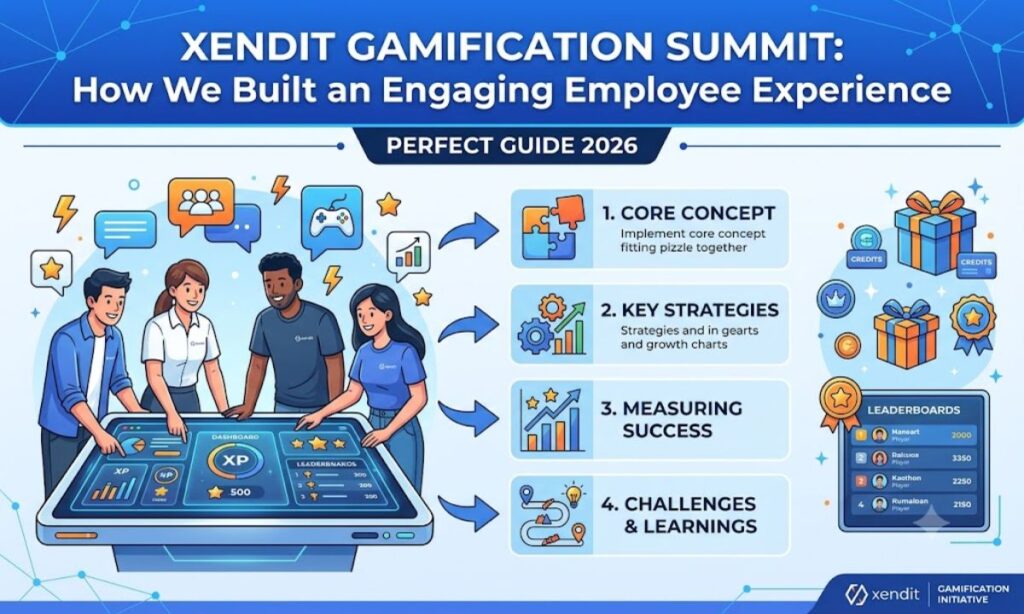
Employee engagement has quietly become one of the hardest problems in modern business. Hybrid schedules, digital fatigue, and constant performance pressure have made old-school engagement tactics — a bonus here, a survey there — feel outdated. This guide walks through a conceptual framework known as Xendit Gamification Summit Work: a model that uses gamification principles to make everyday work feel like progress toward a summit, not just another task list.
Whether you’re an HR leader, team manager, or operations lead, this guide breaks down the strategy, the tools, the metrics, and the lessons behind building a gamified employee experience that actually sticks.
Program at a Glance
| Element | Details |
| Framework name | Xendit Gamification Summit Work |
| Core idea | Turn daily tasks into milestones, quests, and achievements |
| Primary goal | Boost daily engagement, not just annual satisfaction |
| Key tools | Engagement dashboard, badge system, leaderboard, AI nudges |
| Rollout time | Roughly 4–6 months, phased from pilot to company-wide |
| Core metrics | eNPS, participation rate, retention, reward redemption |
| Best suited for | Remote/hybrid teams, fast-growing companies, fintech-style operations |
The Challenge: Why Traditional Employee Engagement Was No Longer Enough
Most companies still measure engagement the old way: an annual survey, a quarterly review, maybe a “employee of the month” shoutout. The problem is timing. These tools tell you how someone felt three months ago — not how they feel today.
A few forces made this gap impossible to ignore:
- Hybrid and remote work removed the small, informal moments of recognition that used to happen naturally in an office.
- Digital fatigue meant employees were tuning out generic emails, newsletters, and recognition platforms.
- Rising performance pressure made burnout harder to spot, since output often stays steady even as motivation quietly drops.
- Delayed feedback loops meant employees completed meaningful work — mentoring a teammate, finishing a hard project — without ever seeing it acknowledged in real time.
Global workplace research consistently shows only around a third of employees describe themselves as truly engaged at work. That statistic is what pushed teams toward a different model: one where progress is visible every single day, not just during a review cycle.
What Exactly Is Xendit Gamification Summit Work?
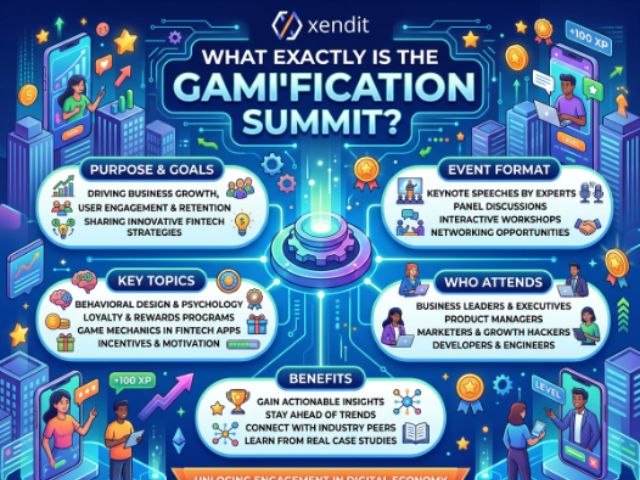
At its core, this framework is a structured employee engagement system that applies game mechanics — points, milestones, badges, and team challenges — to everyday business tasks, tying recognition directly to measurable outcomes.
The “Summit” metaphor is intentional. Instead of treating work as a flat list of unrelated tasks, employees climb toward something. Every completed project, mentoring session, or cross-team collaboration becomes a step upward. It’s less “leaderboard competition” and more “shared ascent.”
Three ideas separate this model from typical gamification:
- Progress over competition — the goal is visible growth, not ranking employees against each other.
- Daily visibility — recognition happens in the moment, not months later.
- Team-based milestones — quests are often collaborative, not just individual point-chasing.
Setting Clear Goals and Success Metrics from Day One
No gamification program survives without measurable goals attached from the very start. Before building anything, the framework called for answering four questions:
- What does “engaged” actually look like in daily behavior?
- Which teams are highest-risk for burnout or disengagement?
- What existing tools (HRIS, chat platforms, project trackers) can this connect to?
- How will success be measured in 30, 90, and 180 days?
Core success metrics used:
- Employee Net Promoter Score (eNPS)
- Daily/weekly active participation rate
- Reward redemption rate
- Voluntary turnover in participating teams
- Manager-reported communication quality
Setting these metrics early prevents the common trap of building a “fun” system that nobody can actually prove is working.
Designing the Gamification Framework: Strategy and Unique Angles
Rather than bolting a generic points system onto existing workflows, the design phase focused on three pillars.
Pillar 1: Meaningful Milestones, Not Arbitrary Points
Points were tied to real outcomes — finishing a project phase, completing a skills course, helping onboard a new hire — instead of vague “activity” points that reward busywork.
Pillar 2: Collaborative Quests
Instead of only individual leaderboards, teams worked through shared “quests”: multi-week challenges requiring several people to hit a milestone together. This reduced the anxiety that comes with pure 1-on-1 competition.
Pillar 3: Recognition Woven Into Daily Tools
Achievements appeared inside the tools employees already used — Slack, project boards, internal dashboards — rather than requiring a separate app nobody opens.
Step-by-Step Implementation Roadmap
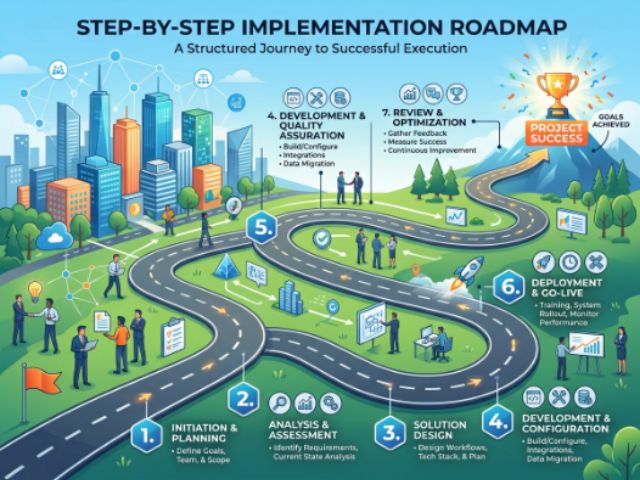
Rolling this out company-wide overnight would have overwhelmed both employees and managers. A phased rollout worked far better.
- Discovery phase (Weeks 1–4): Interview managers and employees, map existing engagement gaps, and define which behaviors to reward.
- Pilot group (Weeks 5–10): Launch with one or two willing teams, keep mechanics simple, and gather direct feedback.
- Iterate on feedback (Weeks 11–14): Adjust point values, fix confusing mechanics, and remove anything that feels like busywork.
- Department-wide expansion (Weeks 15–20): Roll out to additional departments with tailored quests relevant to each function.
- Full company rollout (Weeks 21–26): Launch org-wide dashboards, seasonal events, and manager training.
- Ongoing optimization: Review metrics quarterly and refresh quests to avoid staleness.
Core Mechanics That Made Daily Work Feel Like a Summit
| Mechanic | What It Does | Why It Works |
| Progress dashboard | Shows real-time completion of goals | Makes invisible work visible |
| Achievement badges | Recognizes specific skills or contributions | Creates a sense of mastery |
| Team quests | Multi-person collaborative challenges | Builds connection, not just competition |
| Seasonal leaderboards | Time-boxed friendly competition | Keeps energy fresh without long-term pressure |
| AI-based nudges | Personalized suggestions based on role and activity | Feels relevant instead of generic |
| Redeemable rewards | Points convert to real perks employees choose | Gives autonomy over recognition |
A few extra design choices mattered more than expected:
- Badges were tied to specific skills (e.g., “Mentor,” “Problem Solver”) rather than vague titles.
- Leaderboards reset every season so no one felt permanently behind.
- Rewards were flexible — extra time off, learning stipends, or gift cards — rather than one-size-fits-all prizes.
Technology Stack and Tools That Powered the Program
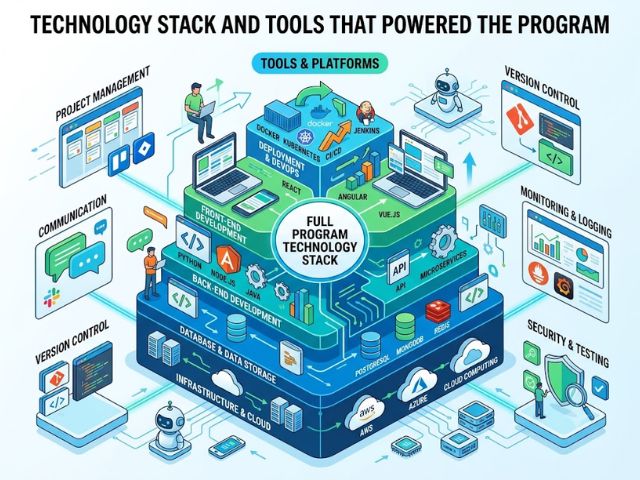
Building this kind of system requires connecting several types of tools rather than relying on one all-in-one platform.
- Engagement/gamification platform:handles points, badges, and quest logic
- Analytics dashboard:tracks participation rate, eNPS, and redemption data in real time
- HRIS integration:pulls role and team data so challenges stay relevant
- Communication tool integration (Slack/Teams) :surfaces achievements where people already work
- AI personalization layer :suggests next challenges based on individual activity patterns
The emphasis throughout was integration, not addition. Every tool needed to plug into existing workflows instead of creating one more login employees had to remember.
Read More: Exploring GoralBlue.com: A Powerful Guide 2026
Measuring Results: Data, Stories, and Unexpected Wins
Programs like this typically show two kinds of results: the numbers, and the stories behind them.
Typical measurable outcomes reported by organizations using similar frameworks:
- Noticeable increases in daily active participation within the first quarter
- Improved eNPS scores among participating teams
- Higher completion rates for training and onboarding tasks
- Reduced voluntary turnover in pilot departments
Unexpected wins often matter just as much:
- Cross-team communication improved even outside the gamified system — a side effect nobody explicitly designed for.
- Managers reported catching burnout signals earlier, since disengagement showed up in dashboard activity before it showed up in performance reviews.
- Employees started forming informal peer groups around shared quests, strengthening culture organically.
Challenges We Faced and How We Solved Them
No gamification rollout is friction-free. Common challenges — and practical fixes — include:
| Challenge | Solution |
| Employees felt over-monitored | Made participation optional early on; emphasized growth, not surveillance |
| Leaderboard anxiety | Shifted toward team-based quests and seasonal resets |
| Novelty wore off after a few months | Refreshed quests regularly; rotated seasonal themes |
| Managers unsure how to use the data | Ran short training sessions on reading dashboards without micromanaging |
| Reward fatigue | Diversified rewards beyond points — added skill badges and career-path visibility |
Key Lessons and Best Practices for Other Companies
For organizations considering a similar approach, a few lessons stand out consistently:
- Start small. A pilot group prevents costly missteps at scale.
- Tie points to real outcomes. Arbitrary points feel hollow fast.
- Favor collaboration over pure competition. Team quests build culture; endless rankings create stress.
- Refresh content regularly. Stale challenges lose engagement within a few months.
- Measure early and often. Without eNPS and participation data, it’s impossible to prove impact.
- Give employees choice in rewards. Autonomy matters more than the prize itself.
The Future of Xendit Gamification Summit Work

Looking ahead, a few trends are shaping where this kind of framework is heading:
- Linking gamified data to career development:using demonstrated skills, not just tenure, to inform promotion conversations.
- Deeper AI personalization:tailoring quests to individual working styles rather than department-wide defaults.
- Wellbeing-integrated metrics:combining engagement data with workload and burnout indicators for a fuller picture.
- Cross-company benchmarking:as more organizations adopt similar models, shared benchmarks for participation and eNPS may emerge.
As hybrid work becomes permanent rather than temporary, frameworks built around visible, daily progress are likely to keep gaining traction over static, once-a-year engagement tactics.
Frequently Asked Questions
What is Xendit Gamification Summit Work?
It’s a conceptual employee engagement framework that applies game mechanics — milestones, badges, and quests — to everyday work tasks.
Is this an official Xendit program?
There’s no verified, publicly documented evidence this is an official Xendit initiative; it’s best treated as an illustrative model.
How long does implementation typically take?
Most phased rollouts take around four to six months, from pilot group to company-wide launch.
What metrics matter most for gamification success?
eNPS, participation rate, reward redemption, and voluntary turnover are the most commonly tracked indicators.
Does gamification work for remote teams?
Yes — it can be especially useful for remote and hybrid teams, since it restores visibility that’s normally lost outside an office.
What’s the biggest risk with workplace gamification?
Over-relying on competitive leaderboards, which can create stress instead of motivation if not balanced with collaborative elements.
Conclusion
Whether or not “Xendit Gamification Summit Work” exists as a real, documented case study, the underlying model it describes reflects a genuine shift happening across modern workplaces: engagement built on daily visibility, meaningful milestones, and collaboration — not just annual reviews and generic perks. Companies exploring this kind of framework should start small, measure relentlessly, and keep the human experience — not the leaderboard — at the center of the design.
Leave a Reply