TW Meaning in Text: What It Really Means and When to Use It
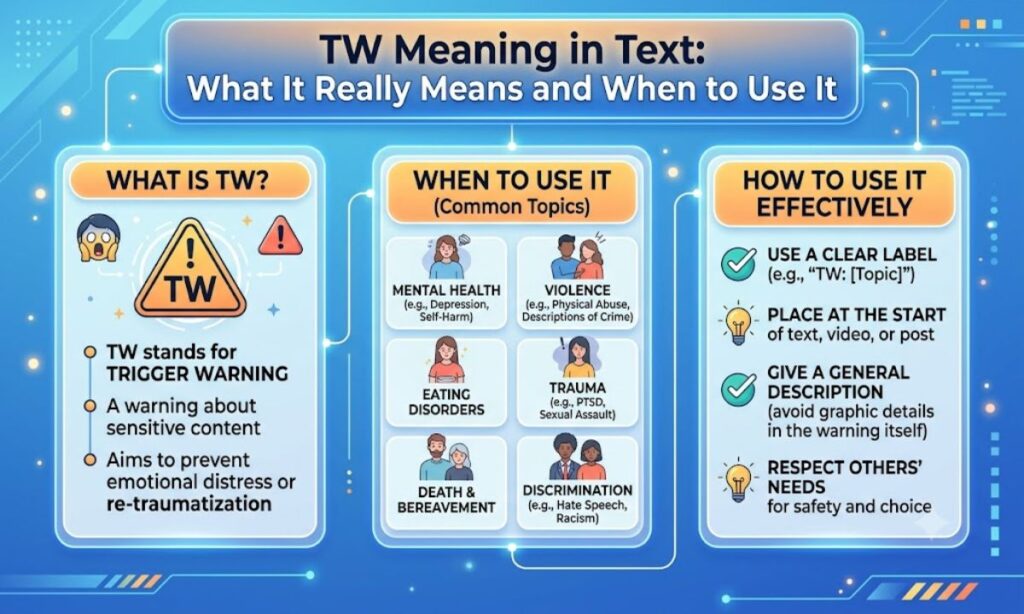
Scrolling through social media or a group chat, you’ve probably seen a message that starts with “TW” followed by a colon and a topic. It looks small, but it carries a big purpose. This two-letter tag has become one of the most common pieces of digital etiquette online, especially in spaces where people talk about mental health, personal struggles, or heavy topics.
If you’ve ever paused and thought, “wait, what does TW actually mean here?” — you’re not alone. This guide breaks down the TW meaning in text, where it came from, how it differs from CW, and exactly when (and when not) to use it.
What Does TW Mean in Text?
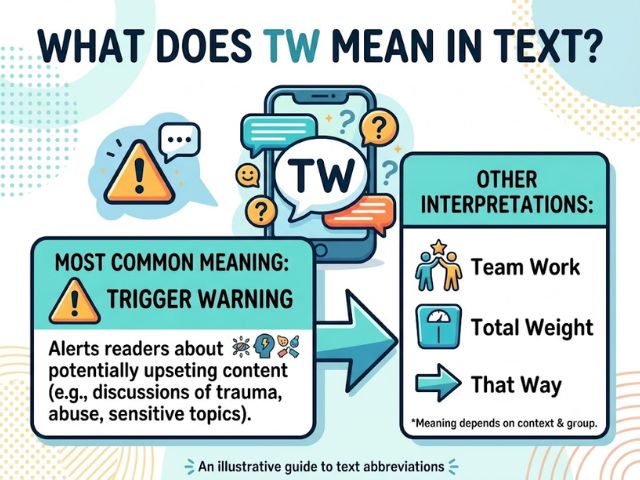
TW stands for Trigger Warning. It’s a short heads-up placed before a message, post, or caption to let readers know that what follows might touch on a sensitive, distressing, or emotionally heavy subject.
Instead of jumping straight into a difficult topic, the sender adds “TW” at the start so the reader can decide whether they want to keep reading, scroll past, or prepare themselves mentally first.
A typical TW message looks like this:
TW: self-harm — I’ve been having a really hard time lately and wanted to talk about it.
The label itself isn’t meant to be dramatic. It’s a small courtesy that gives the other person a choice before they’re exposed to something that could upset them or bring back painful memories.
Where Did TW Come From? A Quick Origin Story
The idea of a trigger warning didn’t start as internet slang — it has roots in psychology and support communities. The term was originally used in mental health and trauma-recovery spaces to describe content that might “trigger” a stress response in someone who had experienced trauma, such as combat, abuse, or a serious accident.
As online forums and blogging platforms grew in the 2000s and early 2010s, trigger warnings moved from clinical settings into everyday internet culture. Communities discussing eating disorders, self-harm, and abuse recovery began using “trigger warning” as a standard header on posts.
Over time, as texting and social media captions demanded shorter formats, “trigger warning” was naturally shortened to TW — the same way “by the way” became “BTW.” Today, TW shows up everywhere from Instagram captions to Discord servers to casual text messages between friends.
TW vs. CW: What Is the Difference?
You’ll often see TW used alongside another abbreviation: CW, which stands for Content Warning. Many people use them interchangeably, but there’s a subtle difference in tone and intent.
| Feature | TW (Trigger Warning) | CW (Content Warning) |
| Full meaning | Trigger Warning | Content Warning |
| Primary purpose | Warns about content that may trigger trauma responses | Warns about content that may simply be uncomfortable or graphic |
| Tone | More personal and psychological | More general and neutral |
| Common in | Mental health, abuse recovery, personal stories | News, reviews, general content warnings |
| Example | TW: suicide | CW: violence, strong language |
In short, TW tends to focus on trauma-related topics, while CW is broader and can cover anything from spoilers to graphic imagery. Many online communities now prefer CW because it feels less clinical and doesn’t assume the reader has a specific trauma history — but TW remains far more common in everyday texting.
Common Topics That Get a TW Label
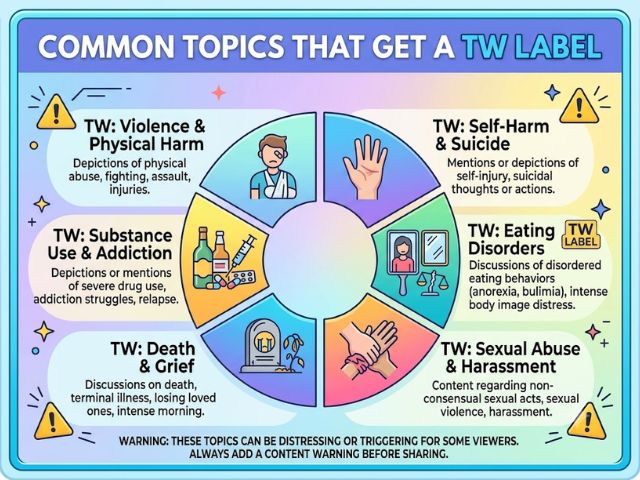
Not every sensitive topic needs a TW, but certain subjects almost always come with one because they’re widely recognized as potentially distressing. These include:
- Self-harm or suicide
- Depression, anxiety, or other mental health struggles
- Physical or sexual abuse
- Eating disorders
- Death or grief
- Domestic violence
- Substance abuse or addiction
- Graphic violence or injury
- Miscarriage or pregnancy loss
- Discrimination or hate speech
If a topic falls into one of these categories, adding a TW is considered good practice, especially in public posts or group chats where you don’t know everyone’s personal history.
Does TW Have Other Meanings in Text?
Yes. While “Trigger Warning” is by far the most common meaning, TW can stand for a few other things depending on the context of the conversation:
| Alternate Meaning | Context Where It’s Used |
| Older internet slang, less common now | |
| Twin | Casual slang between close friends |
| Team Work | Workplace or gaming chats |
| Terawatt | Physics and energy discussions |
| Tiger Woods / celebrity initials | Sports or entertainment chats |
Context is everything here. If someone texts “TW: my ex called me last night” in a casual conversation, they probably mean trigger warning. But if you’re in a group chat about football and someone types “TW,” they might just be using someone’s initials or a nickname. Always read the surrounding conversation before assuming which meaning applies.
Real-Life Examples of TW in Text and Social Media
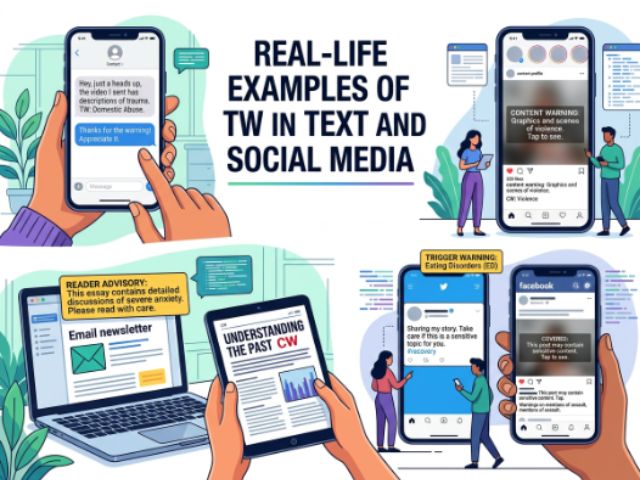
Here’s how TW typically shows up in real conversations:
Text message between friends:
TW: family stuff. My parents got into a huge fight again and I just need to vent.
Instagram caption:
TW: eating disorder recovery. Sharing my journey today, feel free to skip if this isn’t something you want to see right now.
Group chat:
TW: mentions of loss. Just found out my grandma passed, needed somewhere to say it.
TikTok video description:
TW: anxiety attack shown in this video. Please take care while watching.
In each case, the TW comes first, followed by a brief note about the topic, so the reader can make an informed choice before continuing.
Read More :What Does WYM Mean in Text? Full Guide for 2026
How to Use TW Correctly (And What to Avoid)
Using TW well is less about the letters themselves and more about intention. Here’s how to do it right:
- Place it at the very beginning:of your message or caption, not buried in the middle.
- Name the topic briefly: right after the colon (e.g., “TW: self-harm”) rather than leaving it vague.
- Keep some space: between the warning and the actual content, especially in longer posts, so readers have a moment to decide.
- Use it sincerely: not as a joke or exaggeration for something minor.
- Match the warning to the actual content:don’t undersell something genuinely heavy or oversell something trivial.
What to avoid:
- Don’t use TW sarcastically for things that aren’t actually distressing (like “TW: Mondays”).
- Don’t skip the topic description — just writing “TW” with nothing after it isn’t very helpful.
- Don’t assume everyone knows what TW means; in formal or mixed-audience settings, spelling it out is safer.
Common Mistakes People Make With TW
Even well-meaning people slip up when using this tag. Some of the most frequent mistakes include:
- Overusing it for minor inconveniences, which can dilute its meaning over time
- Using it as a punchline, which can come across as mocking people who genuinely rely on these warnings
- Forgetting to specify the topic, leaving readers just as unprepared as if there were no warning at all
- Assuming a TW excuses graphic detail, when really the point is to soften the delivery, not just label it and continue as normal
- Confusing TW with unrelated abbreviations without checking the context first
Being mindful of these mistakes keeps the tag meaningful and genuinely useful for the people who need it.
Should You Always Use TW or Is It Optional?
TW is not a strict rule — it’s a social courtesy. There’s no universal policy forcing anyone to use it, but many online communities, forums, and even some workplaces encourage it as a form of digital etiquette.
Here’s a simple way to decide:
| Situation | Should You Use TW? |
| Posting publicly about trauma, abuse, or mental health | Yes, strongly recommended |
| Texting a close friend who already knows your story | Optional, but still thoughtful |
| Sharing news content with graphic details | Yes, or use CW instead |
| Casual conversation with no sensitive content | Not needed |
| Professional or academic writing | Usually written out in full instead of abbreviated |
When in doubt, it’s better to include a brief warning than to leave someone unexpectedly confronted with something painful.
TW in Text vs. TW in Formal Writing
There’s a clear difference in how TW is used casually versus how it appears in more formal or professional writing.
In texting and social media:
- Short and abbreviated (“TW: grief”)
- Placed at the top of the message or caption
- Informal tone, often followed by emojis or a brief personal note
In formal or professional writing:
- Usually spelled out fully as “Trigger Warning” or “Content Note”
- Placed as a standalone line before an article, report, or academic paper
- Often includes more detail about why the warning is necessary
Journalists, educators, and mental health professionals typically avoid the shorthand “TW” in official documents because not every reader will recognize the abbreviation. Clarity matters more than brevity in those settings.
Which Should You Use: TW, CW, or Something Else?
Choosing between TW and CW often comes down to the community you’re in and the nature of the content.
- Use TW when the content relates closely to trauma, mental health struggles, or personal experiences that could trigger a strong emotional or psychological reaction.
- Use CW when the content is broader — things like violence in a movie review, strong language, or spoilers — without necessarily implying trauma.
- Some platforms and communities now prefer neutral phrases like “Content note” or “Heads up” as softer alternatives to both.
There’s no single “correct” choice across the entire internet — different communities have developed their own norms. The safest approach is to observe how the people around you (a specific forum, Discord server, or friend group) typically label sensitive content, and follow that pattern.
TW Meaning Not Trigger Warning
While “Trigger Warning” covers the vast majority of everyday uses, it’s worth remembering that TW isn’t exclusively tied to sensitive-content warnings. In casual friend groups, TW can simply mean “twin” — a nickname used between close friends who share similar styles, opinions, or personalities. In technical or scientific writing, TW might refer to terawatt, a unit of power. In sports or entertainment chats, it could reference someone’s initials.
If a message doesn’t fit the pattern of a warning (no colon, no sensitive topic following it, casual tone), it’s worth considering these alternate meanings before assuming the worst.
Frequently Asked Questions
What does TW mean in a text message?
TW usually means “Trigger Warning,” a short heads-up before sensitive or distressing content.
Is TW the same as CW?
They’re similar, but CW (Content Warning) is broader and more neutral, while TW often relates specifically to trauma.
Do I have to explain what the TW is about?
It’s best practice to briefly name the topic after TW so the reader knows what to expect.
Is using TW considered formal or informal?
It’s informal — in formal writing, “Trigger Warning” is usually spelled out in full.
Where did the trigger warning concept originate?
It began in mental health and trauma-support communities before spreading to general internet use.
Conclusion
TW might just be two letters, but it plays a real role in making online spaces feel a little safer and more considerate. At its core, it means “Trigger Warning” — a small signal that gives people the choice to prepare themselves or step away before encountering something emotionally heavy.
Whether you’re texting a friend, posting on social media, or scrolling through a forum, understanding TW meaning in text helps you communicate with more empathy and read conversations with better context. Use it sincerely, keep it clear, and you’ll be contributing to a kinder, more thoughtful corner of the internet.
Leave a Reply