
If you’ve spent any time on TikTok or Instagram in the last few years, you’ve almost certainly seen the word “baddie” pop up in captions, comments, and video titles. Maybe a friend called you a baddie in a text, and you weren’t sure whether to say thanks or side-eye your phone. You’re not alone. “baddie” is one of the most-searched slang terms of the decade, and its meaning has shifted a lot from where it started.
This guide breaks down everything you need to know: what baddie really means, where it came from, how it’s used across social media, and whether it’s a compliment or not.
What Does “Baddie” Mean in Slang?
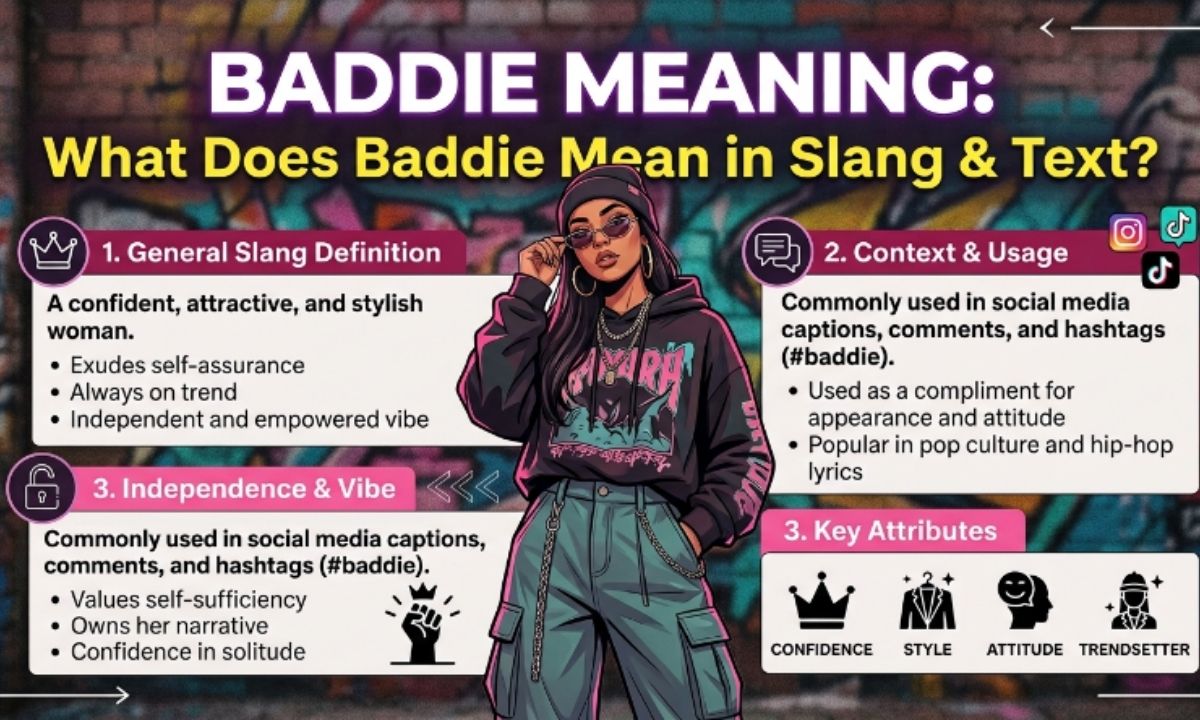
In modern slang, a baddie is someone, usually a woman, who is confident, stylish, attractive, and completely owns her presence. Think flawless makeup, a put-together outfit, and an “I know I look good” energy.
The word isn’t an acronym or abbreviation. It’s simply a playful spin on the word “bad,” used in a positive sense (similar to how Michael Jackson used “bad” to mean impressive rather than negative). Being a baddie is about the full package: looks, confidence, and attitude combined into one word.
Key traits associated with a baddie include:
- Confidence: carrying yourself with self-assurance, no apologies
- Style: a strong, put-together fashion sense
- Glam: polished makeup, skincare, and grooming
- Attitude: bold, unbothered, and self-possessed energy
- Independence: someone who doesn’t need external validation
Where Did the Word “Baddie” Come From?
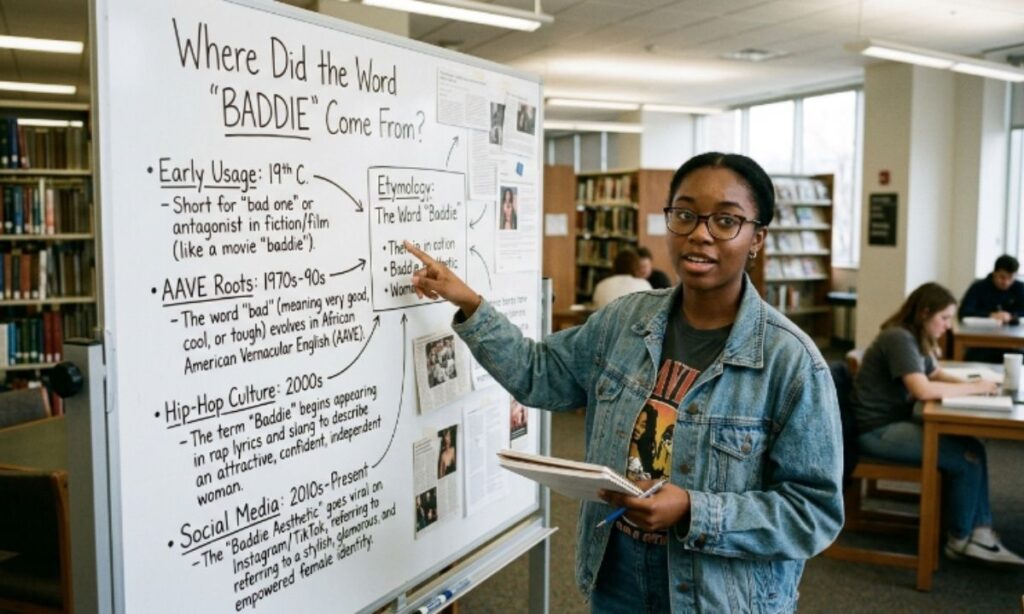
The term didn’t start on social media it has a much longer history. Here’s a simplified timeline of how “baddie” evolved:
| Era | Meaning of “Baddie” |
| Early-to-mid 1900s | Simply meant “villain” (a bad guy in movies, TV, or books) |
| 1980s–2000s | “Bad” gets reclaimed in Black culture and hip-hop as a compliment (i.e., “bad” = impressive) |
| 2010s | “Baddie” emerges in African American English as a term for a confident, attractive woman |
| Mid-2010s | Instagram baddie aesthetic takes off sharp eyeliner, contour, fitted outfits |
| Late 2010s–2020s | TikTok and Gen Z push the word mainstream, expanding it beyond just women |
The positive version of “baddie” is rooted in African American Vernacular English (AAVE), closely tied to the term “bad b***h” both describing a woman who knows her worth and carries herself with unshakeable confidence. Social media, particularly Instagram beauty and fashion communities, took that cultural foundation and turned it into a full aesthetic movement, complete with hashtags celebrating self-image and empowerment.
Baddie Meaning in Text Messages (What It Means When Someone Calls You a Baddie)
If someone texts you and calls you a “baddie,” relax it’s almost always meant as a compliment. In texting and DMs, “baddie” is shorthand for saying: you look really good, and you know it.
Here’s how to read the tone depending on context:
- From a friend: Playful, supportive compliment about your look or confidence
- From a crush or potential partner: Flirty way of saying they find you attractive
- In a group chat: Often used casually, almost like a hype word
- Self-referential (“I’m feeling like a baddie today”): Expressing confidence about your own appearance or mood
In texting culture, it’s rarely used sarcastically unless the tone of the rest of the conversation makes that obvious. If you’re ever unsure, context clues (emojis, prior messages) will usually tell you it’s genuine praise.
Baddie vs. Bad Girl: What’s the Difference?
People sometimes confuse “baddie” with “bad girl,” but they mean very different things.
| Term | Meaning | Vibe |
| Baddie | Confident, stylish, attractive person who owns their look | Empowerment, glam, self-assurance |
| Bad girl | Someone who is rebellious, mischievous, or breaks the rules | Edgy, defiant, sometimes negative |
A “bad girl” is about behavior and attitude toward rules or authority. A “baddie” is about appearance, confidence, and aesthetic presence. You can absolutely be both, but the terms aren’t interchangeable: one describes conduct; the other describes a persona built around style and self-assurance.
What Does “Baddie” Mean on TikTok?
On TikTok, “baddie” has grown into an entire content category. The #baddie hashtag covers get-ready-with-me videos, outfit transitions, gym content, and makeup tutorials all built around the same core idea: looking and feeling your absolute best.
Popular TikTok baddie sub-trends include:
- Gym baddie: fitness-focused content emphasizing discipline and body confidence
- Baddie transitions: before-and-after outfit or glow-up videos
- Baddie makeup tutorials: sharp cat-eye liner, contour, glossy lips
- Baddie fits: outfit-of-the-day style content
TikTok has also broadened the term to apply to more people than the original definition suggested, including men (more on that below), showing how quickly slang evolves once it hits viral platforms.
What Does “Baddie” Mean on Instagram?
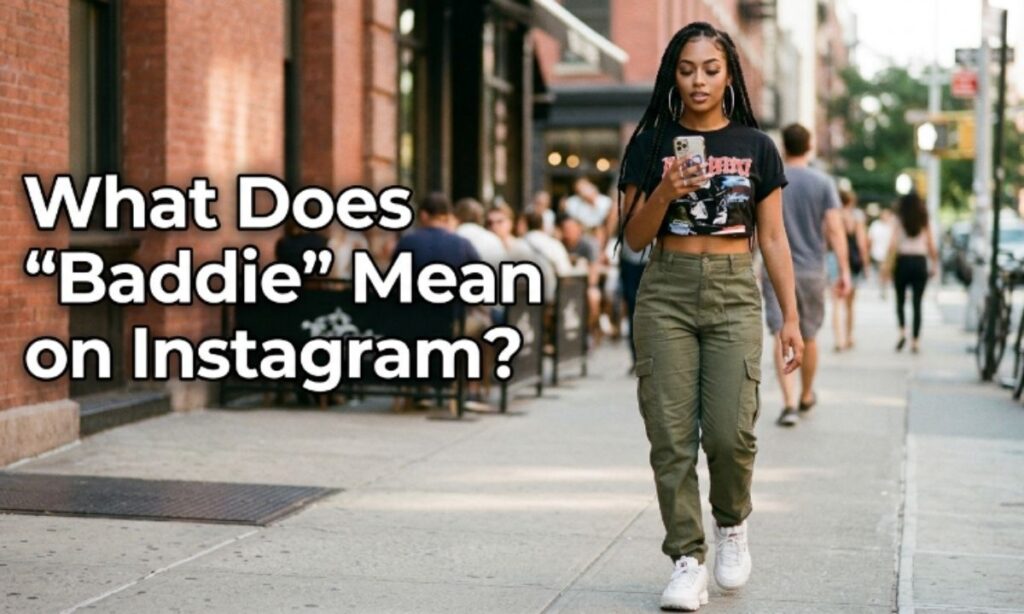
Instagram is really where the modern “baddie aesthetic” first took visual shape. Before TikTok existed, baddie-style content was already thriving on Instagram through:
- Heavily filtered, glam selfies
- Fitted, trend-forward outfits (think bodycon dresses, matching sets)
- Full-glam makeup looks
- Confident captions (“baddie era,” “feeling myself”)
On Instagram, calling someone a baddie in a comment section is a common way to hype up a photo — it’s the visual equivalent of saying “you ate this” or “you look incredible.”
Baddie Aesthetic: What Does It Look Like?
The baddie aesthetic is a specific visual style built around glam and confidence. Common elements include:
- Makeup: Winged eyeliner, contour, false lashes, glossy or bold lips
- Hair: Sleek styles, laid edges, voluminous curls, or trendy colors
- Fashion: Fitted clothing, matching sets, statement accessories, designer or designer-inspired pieces
- Nails: Long, detailed nail art
- Attitude: Confident posing, direct eye contact with the camera, “unbothered” body language
It’s less about a single outfit and more about a whole vibe: polished, intentional, and camera-ready at all times.
Read More: Pookie Meaning in Hindi – Pookie का मतलब, Origin और पूरी जानकारी
Is Being Called a “Baddie” a Compliment or an Insult?
Despite the word literally containing “bad,” being called a baddie today is overwhelmingly a compliment. It signals that someone sees you as attractive, confident, and stylish — a full package rather than just one trait.
That said, context still matters:
- ✅ Compliment: “She walked in looking like a total baddie” praise for appearance and confidence
- ✅ Compliment (self-use): “I’m in my baddie era,” expressing self-confidence
- ⚠️ Rare exception: In older or non-slang contexts, “baddie” can still mean “villain,” so tone and setting decide the meaning
If it’s used in a casual, social-media-adjacent context, you can almost always take it as a genuine compliment.
How to Use “Baddie” in a Sentence
Here are some natural examples of “baddie” in everyday use:
- “She showed up to the party looking like an absolute baddie.”
- “I’m feeling like a baddie today, new hair and everything.”
- “That’s such a baddie outfit. Where did you get it?”
- “He’s really leaning into his baddie era lately with the fits.”
- “Stop being humble, you’re a baddie, and you know it.”
Note: The word is typically used as a statement, not a hedge. Saying “she’s kind of a baddie” undercuts the confidence the word is supposed to convey.
Baddie Energy: What Does It Mean?
“Baddie energy” refers to the confidence and attitude associated with being a baddie, even without full glam or a specific outfit. It’s about how you carry yourself, not just how you look.
Someone can have baddie energy by:
- Walking into a room with confidence
- Speaking their mind without apology
- Handling setbacks gracefully while staying composed
- Prioritizing self-care and self-respect
Essentially, baddie energy is the internal mindset behind the external aesthetic: confidence first, style second.
Male Baddie: Does the Term Apply to Guys Too?
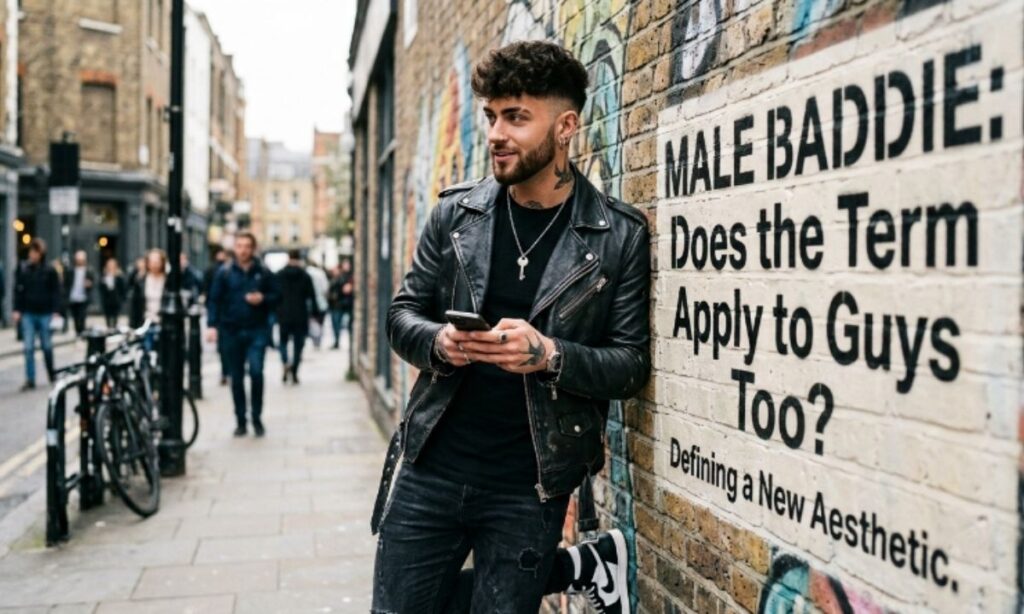
Yes while “baddie” originally described women almost exclusively, the term has expanded to include men, especially through TikTok. A male baddie typically embraces:
- Polished grooming (skincare, defined hairstyles, grooming routines)
- Trend-forward, sometimes gender-fluid fashion choices
- Jewelry and accessories
- A confident, camera-ready presence
- Fitness and “looksmaxxing” content
The male baddie trend reflects a broader shift in how confidence and self-presentation are discussed online blurring traditional style lines between masculine and feminine aesthetics. It’s still a newer, more debated use of the term, but its presence on TikTok shows the word continuing to evolve.
Other Slang Words Similar to “Baddie”
If you’re trying to understand baddie culture, these related slang terms often show up alongside it:
| Term | Meaning |
| Bad b*h** | Confident, self-sufficient woman (closely related origin) |
| It girl | Someone effortlessly popular, trendy, and admired |
| Glow-up | A noticeable positive transformation in appearance or confidence |
| Main character energy | Living/acting like the protagonist of your own story |
| Slay | Doing something exceptionally well, often about appearance |
Conclusion
At its core, “baddie” is a slang word that celebrates confidence, style, and self-assurance. What started as a term for movie villains transformed through hip-hop culture, AAVE, and social media into one of the biggest compliments you can give someone today. Whether it’s used in a text message, a TikTok caption, or an Instagram comment, calling someone a baddie means you see them as attractive, put-together, and unapologetically themselves.
So the next time someone calls you a baddie, you can skip the confusion, just say thank you and own it.
Frequently Asked Questions
Is “baddie” only used for women?
No. While it originated as a term for confident, stylish women, it’s now also used to describe men through the “male baddie” trend.
Is calling someone a baddie rude?
No, it’s almost always meant as a compliment referring to confidence, style, and attractiveness.
What’s the difference between a baddie and a bad girl?
A baddie refers to style and confidence, while a “bad girl” refers to rebellious or rule-breaking behavior.
Where did the word “baddie” originally come from?
It started as slang for a villain, then evolved through African American English and hip-hop culture into a compliment for confident, stylish people.
What does “baddie energy” mean?
It refers to the confidence and attitude of a baddie, even without full makeup or a specific outfit.
Can “baddie” still mean villain?
Yes, in traditional or non-slang contexts, “baddie” can still refer to a bad guy or antagonist in a story.
