
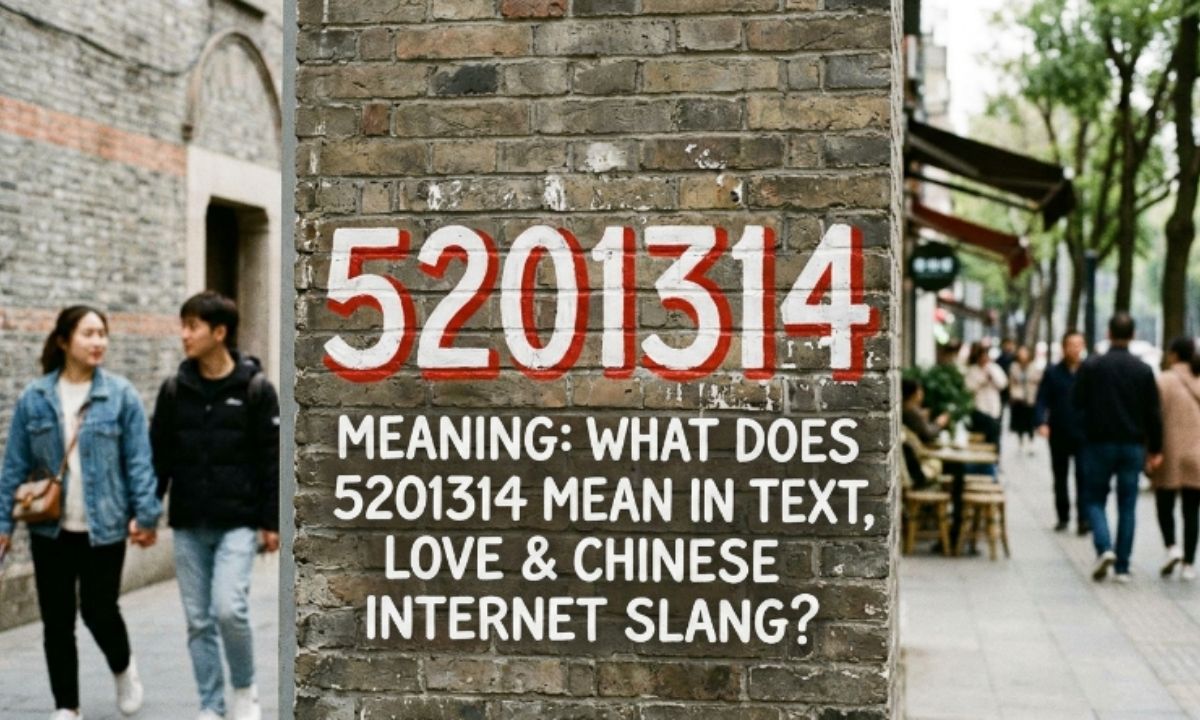

If you’ve ever gotten a text, DM, or comment that just says 5201314, you might have wondered if it’s a phone number, a typo, or some kind of code. It’s actually none of those it’s one of the most popular romantic expressions in Chinese digital culture.
This guide breaks down exactly what 5201314 means, where it comes from, how to use it, and how it fits into the wider world of Chinese numeric love slang like 520, 1314, and 521.
What Does 5201314 Mean? A Quick Answer
In simple terms, 5201314 means “I love you for a lifetime” (我爱你一生一世). It’s a Chinese internet slang term that combines two smaller number codes 520 and 1314 into one longer romantic message.
The number translates to “I love you for a lifetime” in English, a romantic declaration that has become a popular part of digital love language in Chinese culture. People use it in texts, social media captions, anniversary messages, and even wedding-related dates because it packs a full romantic sentence into just seven digits.
Quick summary:
| Code | Sounds Like | Meaning |
| 520 | 我爱你 (wǒ ài nǐ) | I love you |
| 1314 | 一生一世 (yī shēng yī shì) | For a lifetime / forever |
| 5201314 | 我爱你一生一世 | I love you for a lifetime |
The Breakdown: How 520 + 1314 Creates This Number Code
Chinese numeric slang works through homophones numbers that, when spoken aloud, sound almost identical to real words or phrases. This works because each number in the sequence corresponds to a Chinese character with a similar pronunciation.
Here’s how the math of romance actually works:
- 5 (wǔ) sounds close to 我 (wǒ) : “I” or “me”
- 2 (èr) sounds close to 爱 (ài) : “love”
- 0 (líng) sounds close to 你 (nǐ) : “you”
- 1 (yī), 3 (sān), 1 (yī), 4 (sì) together sound close to 生一世 (yī shēng yī shì) “one life, one world,” meaning “forever”
Put them together, and 5-2-0-1-3-1-4 reads out almost like a full sentence: “I love you, for a lifetime.” It’s the same logic that turns 88 into “bye-bye” or 520 alone into “I love you” numbers stand in for sounds, not for their literal value.
5201314 Meaning in Text Messages and Chats
In everyday texting, 5201314 is used the way English speakers might use “ILY” or “4ever” as shorthand for something more emotional. Some common ways it shows up in chats:
- As a standalone reply to a romantic message
- Attached to a heart emoji (❤️ 5201314) at the end of a text
- Sent as a caption under a couple photo
- Used as a discreet confession when someone isn’t ready to say “I love you” out loud
People type “5201314” as a way to confess their feelings without spelling everything out, and couples also exchange the code to reaffirm their commitment on anniversaries or special occasions. The appeal is that it feels playful and low-pressure, but the meaning underneath is completely sincere.
Why Chinese Couples Use 5201314 to Say “I Love You Forever”
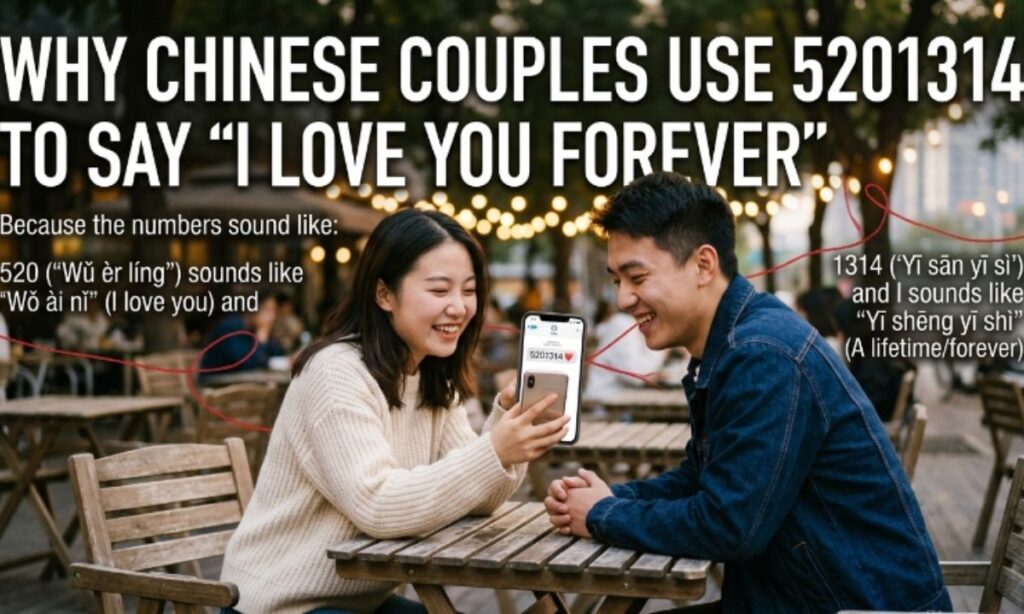
Numbers carry a surprising amount of emotional weight in Chinese culture. Because so many digits sound like real words, they’ve become a natural shorthand for feelings that might otherwise feel awkward to say directly.
This numerical expression combines two number codes 520 (I love you) and 1314 (for a lifetime) creating one of the most heartfelt messages someone can send in digital communication. Using it also has a few practical advantages for couples:
- It’s shorter than typing a full sentence in Chinese characters
- It feels less formal and more playful than saying “我爱你一生一世” outright
- It’s become a recognizable romantic symbol, so the receiver instantly understands the intent
- It works well in limited-character formats like captions, bios, and old-school SMS
Couples sometimes go a step further and try to time their marriage registration for 13:14 in the afternoon on May 20th, turning the number code into an actual real-world date and time.
520 Meaning Explained: China’s Unofficial Valentine’s Day
520 is the foundation of the whole 5201314 phenomenon, and it has a life of its own outside the longer number.
520 (wǔ èr líng) sounds like 我爱你 (wǒ ài nǐ), meaning “I love you,” because 5 (wǔ) sounds like “我” and 20 (èr líng) sounds like “爱你.”
Because of this phonetic coincidence, May 20th (5/20) has turned into an unofficial Valentine’s Day across China, sometimes called “520 Day” or “Cyber Valentine’s Day.”
The date has actually become one of the busiest days of the year for marriage registrations, since “520” sounds like “I love you” in Chinese.
Couples registering their marriages
- Red packets (hongbao) sent in amounts like ¥5.20, ¥52.0, or ¥520
- Restaurants and shops pricing romantic set menus at 520 or 1314
- Social media flooded with 520-themed posts and photos
Important distinction: Don’t confuse 520 with 250 (èrbǎiwǔ). 250 means “idiot” or “stupid” in Chinese, so mixing up the two numbers can turn a sweet message into an insult.
Read More: TLDR Meaning: What Does TLDR Mean in Text & Social Media?
1314 Meaning Explained: Why It Sounds Like “Forever” in Mandarin
The second half of the code, 1314, carries its own standalone meaning too.
1314 (yī sān yī sì) represents 一生一世 (yī shēng yī shì), which means “for a lifetime.” Some sources translate the phrase slightly differently as “one life, one world,” which is essentially another way of saying “forever.”
1314 is often paired with restaurant bills, gift amounts, or wedding invitations because it symbolizes permanence and commitment the same emotional territory as “forever” or “till death do us part” in English.
5201314 on TikTok, Instagram, and Social Media Captions
The number has traveled well beyond Chinese-language platforms. It’s now used as a standalone message, worked into longer texts, or added as a caption for romantic photos on Instagram, and it has become widespread enough that even non-Chinese speakers recognize it as a symbol of love.
Common ways people use it on social platforms:
| Platform | Typical Use |
| Caption under couple photos, anniversary posts | |
| TikTok | Comment on romantic videos, sound trends around 520 Day |
| WeChat / Weibo | Status updates, red packet amounts, moment posts |
| Texting apps | Quick reply to “I love you,” anniversary reminders |
Because the number is compact and visually catchy, it also works well as a hashtag (#5201314) or bio addition for couples who want to signal their relationship status without writing a paragraph.
How to Reply When Someone Sends You 5201314
If someone sends you this number, they’re essentially telling you they love you and see a long-term future with you. Here’s how people typically respond:
- Send it back exactly as is : a mirrored 5201314 confirms mutual feelings.
- Reply with 520 : a simpler “I love you too.”
- Reply with 521 (我愿意 / wǒ yuànyì) : meaning “I am willing” or “I do,” often used as a direct response to 520.
- Add a heart emoji : to keep the tone light and casual.
- Say it back in words : if you want to be more explicit and personal.
There’s no wrong way to reply, but responding with silence or a generic “haha” can come across as dismissive, since the sender is making themselves emotionally vulnerable.
Other Chinese Numeric Love Codes You Should Know (521, 3344520, 720)
5201314 isn’t the only number in this romantic vocabulary. Here are a few others that frequently show up alongside it:
| Number Code | Pronunciation | Meaning |
| 521 | wǔ èr yī | “I am willing” / “I do” a reply to 520 |
| 530 | wǔ sān líng | “I miss you” |
| 3344520 | sān sān sì sì wǔ èr líng | “I love you, life after life” |
| 720 | qī èr líng | “I love you” (a lighter regional variant) |
| 1573 | yī wǔ qī sān | “I want to kiss you” |
“3344” (sān sān sì sì) means “life after life” (生生世世), expressing a love that lasts through generations, and it’s often combined with 520 to intensify the sentiment even further. 521 (wǔ èr yī) means “I am willing” or “I do,” and is commonly used as a reply to someone who has sent 520.
These codes all follow the same homophone logic as 5201314, which is why once you understand one, the rest start to make sense quickly.
Is 5201314 Only Romantic, or Can It Be Used for Friends and Family?
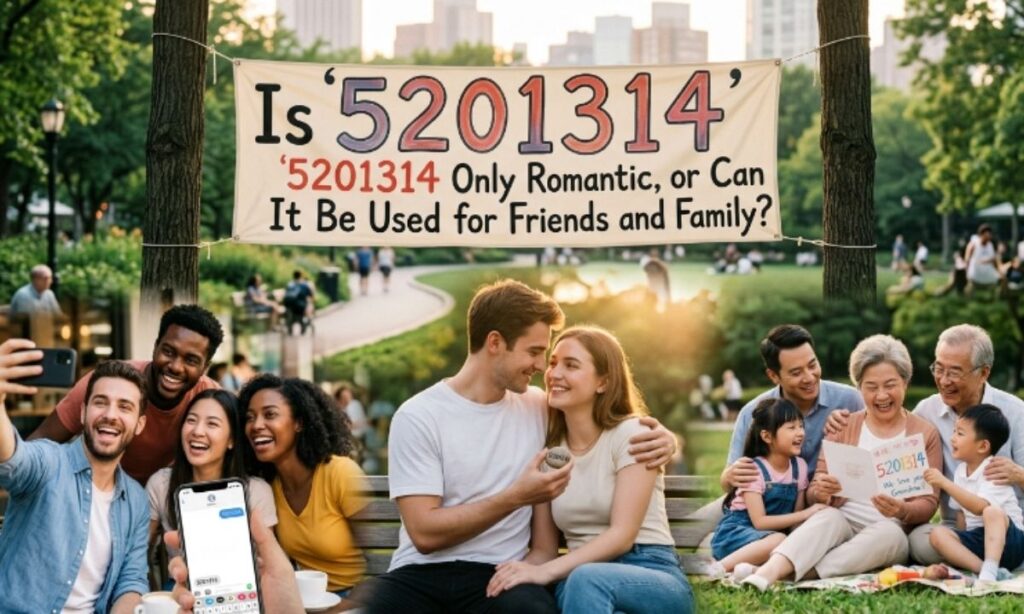
While 5201314 is overwhelmingly used in romantic contexts, it isn’t strictly limited to couples. While it’s primarily romantic, it can also be used more broadly to signify everlasting love or commitment in friendships and family relationships.
That said, context matters:
- Between romantic partners: Almost always interpreted as “I love you forever.”
- Between close friends: Can be used jokingly or affectionately to express a strong, lasting bond.
- Family members: Less common, but used to express deep, permanent love (e.g., parent to child).
If you’re unsure how someone will interpret it, it’s worth reading the relationship context first sending it to a new coworker or casual acquaintance would likely come across as very forward.
5201314 vs. 520 vs. 1314: What’s the Difference?
These three numbers are related but not interchangeable. Here’s a side-by-side comparison:
| Term | Literal Sound-Alike | Meaning | Best Used For |
| 520 | 我爱你 (wǒ ài nǐ) | “I love you” | Quick, everyday confessions or replies |
| 1314 | 一生一世 (yī shēng yī shì) | “Forever” / “for a lifetime” | Emphasizing permanence, gifts, pricing |
| 5201314 | 我爱你一生一世 | “I love you for a lifetime” | Serious declarations, anniversaries, proposals |
Think of it like building blocks: 520 is the confession, 1314 is the promise of permanence, and 5201314 combines both into one complete romantic statement.
Conclusion
5201314 is far more than a random string of digits it’s a compact, clever piece of Chinese internet culture built entirely on how numbers sound when spoken aloud. Breaking it down, 520 says “I love you,” 1314 says “forever,” and together they form one of the most recognizable ways to express lasting love in Mandarin-speaking spaces.
Whether you’ve received it from a partner, seen it in a caption, or you’re planning to send it yourself, you now know exactly what it means, where it came from, and how to use or answer this iconic number code. And once you’ve got 5201314 down, codes like 520, 521, and 3344520 will make a lot more sense too.
Frequently Asked Questions About 5201314’s Meaning
What does 5201314 mean in a relationship?
It means “I love you for a lifetime,” typically used to express deep, long-term commitment to a partner.
Is 5201314 only used by Chinese speakers?
No, it originated in Chinese internet culture but is now recognized and used by non-Chinese speakers as a love symbol too.
What is the difference between 520 and 5201314?
520 means “I love you,” while 5201314 extends that into “I love you for a lifetime” by adding 1314.
How do I pronounce 5201314 in Chinese?
It’s read as the individual digits: wǔ èr líng yī sān yī sì.
What does 521 mean compared to 520?
521 means “I am willing” or “I do,” and is often sent as a reply to someone else’s 520.
Why is May 20th (520) considered Chinese Valentine’s Day?
Because “520” sounds like “I love you” in Mandarin, making that date a popular occasion for romantic gestures and marriage registrations.
Can I send 5201314 to a friend instead of a partner?
Yes, though it’s mainly romantic, it can be used playfully with close friends or family to express a lasting bond.
